
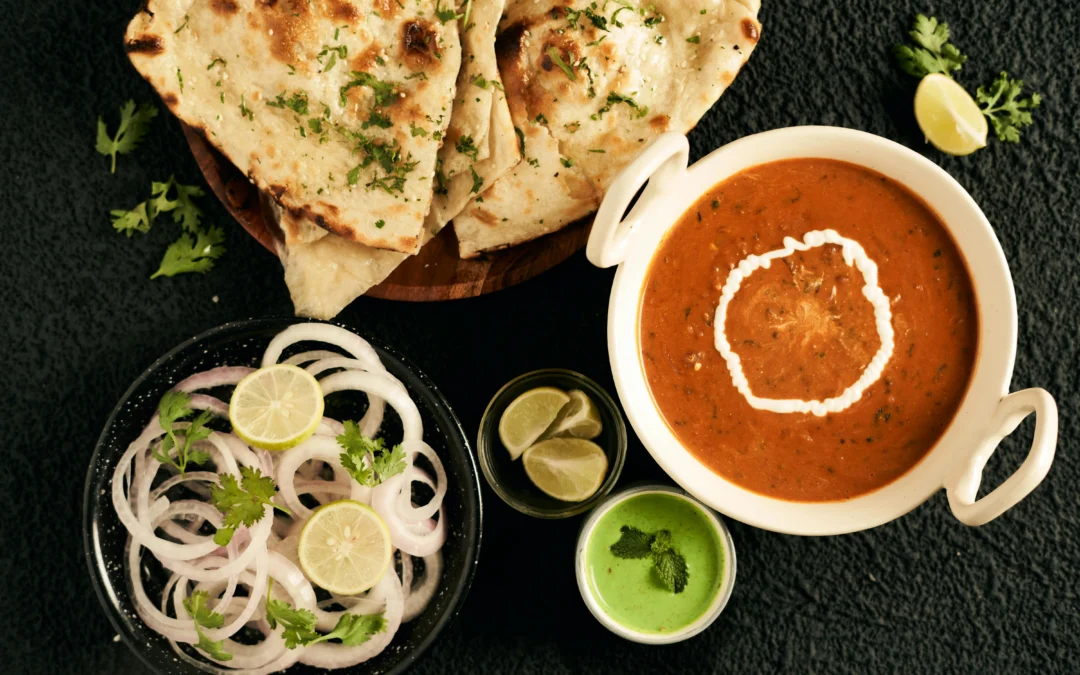
Finding authentic Indian food in London is harder than it looks. A high rating does not always mean a kitchen is doing things properly. Most places stick to the same simplified style the same dishes, the same shortcuts, the same menu you have seen a hundred times. Real Indian cooking is nothing like that. It spans dozens of regional traditions, each with its own ingredients, techniques, and flavour profiles.
This guide covers what actually separates genuine Indian cooking from the generic version the regional differences, the spice work, the cooking methods and what to look for when choosing a restaurant in Soho or anywhere else in the city.
What Makes Indian Food “Authentic”?
Authentic Indian food isn’t one thing it’s three elements in conversation:
- Regional identity – Every dish belongs to a specific part of India
- Spice technique – Not just what spices are used, but how and when
- Cooking method – Traditional processes like tandoor cooking, tarka, and slow simmering
If one of these is missing, the dish is usually adapted rather than traditional.
Indian food is often misunderstood as being “spicy” in terms of heat. In reality, it’s about layered flavour — building depth through stages:
- slow-cooked onions
- reduced tomato bases
- spices added at precise moments
The result is complexity, not just heat.
Why Regional Indian Cuisine Matters — And What London Gets Wrong
This is probably the single biggest thing that gets lost when Indian food travels abroad. People end up thinking of it as one thing — “curry” — when in reality, a Kerala fish preparation and a Punjabi dal makhani have about as much in common as a Neapolitan pizza and a cassoulet from Toulouse.
Here’s a breakdown of the major regional Indian cuisine traditions — and what makes each one distinct from what most London restaurants serve:
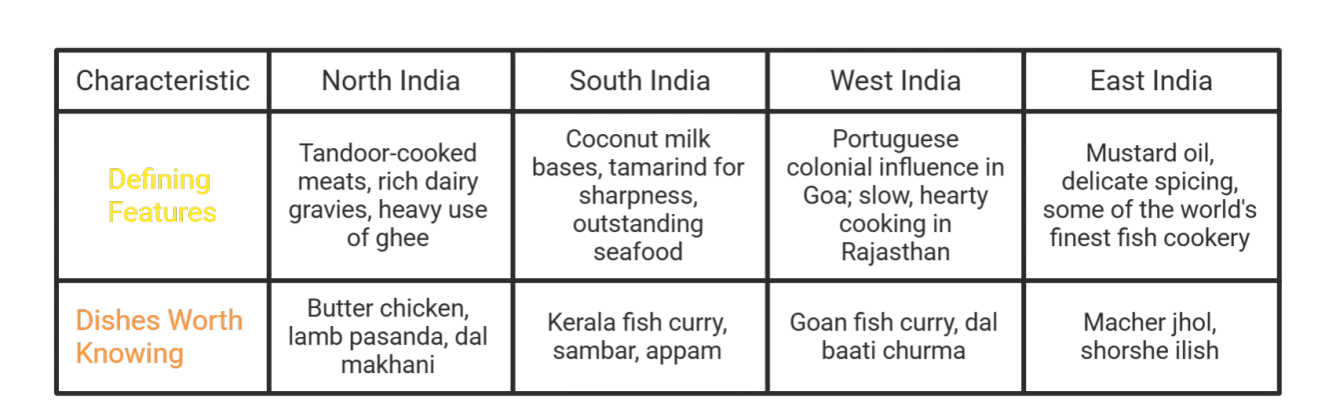
Our menu draws from all of these traditions — not just the northern dishes that tend to dominate London’s Indian restaurant scene. If butter chicken and tikka masala are your usual go-tos, there’s plenty more left to discover.
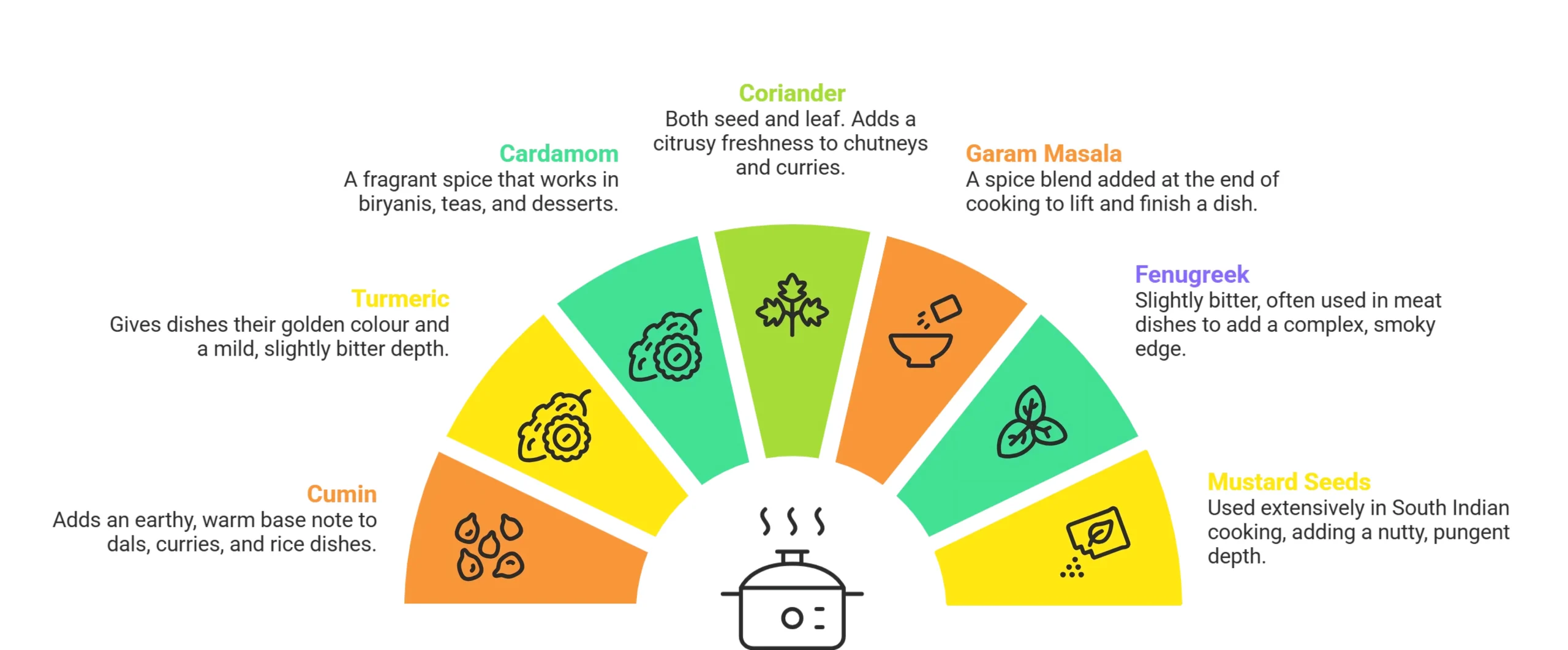
Indian Spices Used in Cooking: What Goes In and Why It Matters.
Traditional Indian Cooking Techniques That Make the Difference
1. Tandoor Cooking
A clay oven reaching extremely high temperatures, used for:
- naan bread
- kebabs
- tandoori meats
It creates a smoky flavour and texture that standard ovens cannot replicate.
2. Tarka (Tempering)
Hot oil or ghee is infused with spices before adding other ingredients.
- Releases essential oils
- Builds the base flavour of the dish
This step takes minutes but defines the outcome.
3. Slow Cooking
Used for dishes like:
- biryani
- korma
- dal
Allows flavours to develop fully over time..Rush it or reheat it and the food loses all its depth.
How to Choose the Best Indian Restaurant in Soho
If you’re searching for a good Indian restaurant in Soho or Central London, these checks help separate authentic kitchens from average ones:
- Look for regional variety
Menus should include various dishes just not butter chicken and tikka masala. - Check how dishes are described
Detailed descriptions (e.g., mustard seeds, curry leaves) show real technique.and transparency - See if a tandoor is used
A proper tandoor is a strong sign of traditional cooking. - Consider longevity
Restaurants that have operated for years often maintain consistent quality. - Ask if food is cooked to order
Fresh preparation usually means better flavour and text
Visit Us: Authentic Indian Food in the Heart of Soho
We are easy to reach from Tottenham Court Road, Oxford Street, and Covent Garden — in the middle of one of London’s most concentrated areas for serious eating.
| Address | 44 Frith Street, Soho, London W1D 4SQ |
| Opening Hours | Seven days a week, including all bank holidays |
| Delivery | Available via Deliveroo |
| Reservations | delhibrasserie.com or call 020 7437 8261 (after 4 PM) |
Ready to Experience Authentic Indian Food in London?
Delhi Brasserie has been cooking real Indian food at 44 Frith Street, Soho since the 1980s — seven days a week, bank holidays included.
📍 44 Frith Street, Soho, London W1D 4SQ 📞 020 7437 8261 (after 4 PM)


