
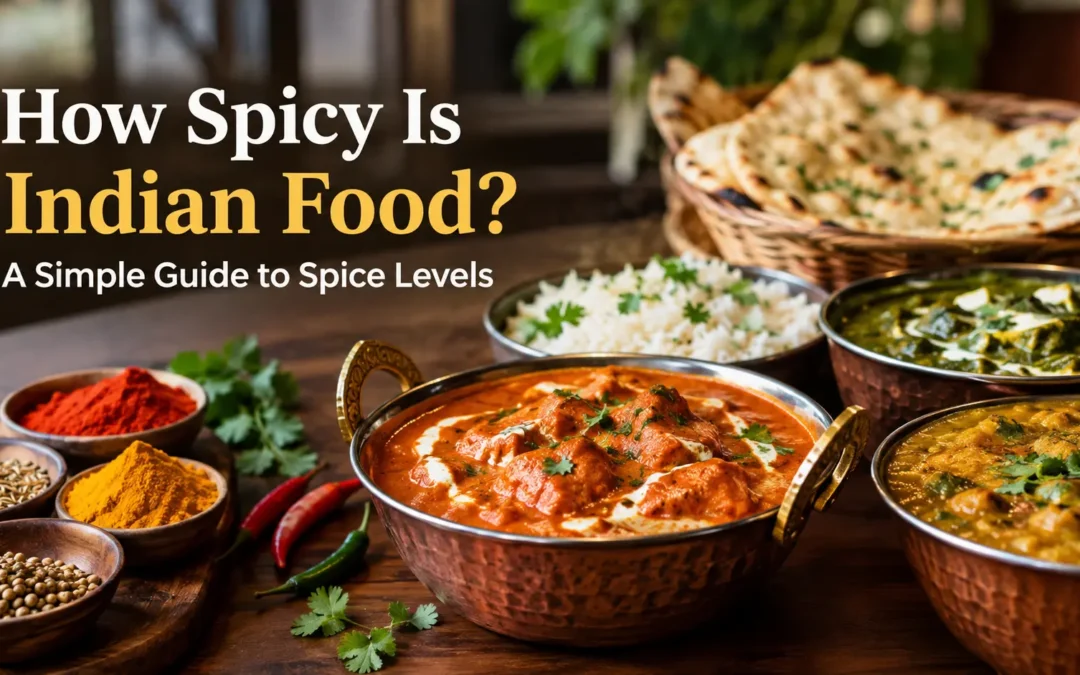
So, how spicy is Indian food? It completely depends on the dish. Indian food ranges from creamy and mild to properly fiery, and most dishes sit in the middle. If you’re dining in Soho and want flavour without too much heat, this guide shows you what to order.
Heat is only one part of Indian cooking, and you can choose how much of it you get. Below, you’ll learn which dishes are gentle, which ones pack a punch, and how to order so the meal suits you. It also explains Indian food spice levels in plain terms.
How Spicy Is Indian Food?
Indian food is as spicy as the cook and the diner want it to be. There is no single heat level across the cuisine.
A dish can be rich in spices and still taste mild. Cumin, coriander, cardamom and turmeric add aroma and depth, not burning heat. Heat mostly comes from chilli.
North Indian cooking, the style served at Delhi Brasserie in Soho, leans towards cream, butter, yoghurt, tomato and slow-cooked gravies. Many of these dishes are warming and rounded rather than sharp.
Does All Indian Food Taste Spicy?
No. Many Indian dishes are mild, and some have no chilli heat at all.
Here is what makes the difference:
- Region. Cooking styles vary widely across India, so heat levels do too.
- Cooking method. Tandoor-grilled dishes rely on marinades, and many are seasoned rather than hot.
- Sauce base. Cream, nuts and yoghurt soften heat. Chilli-heavy tomato or onion gravies raise it.
- Chef’s choice. A good kitchen balances heat with sweetness, sourness and salt.
Also, “curry” isn’t one dish. The word covers hundreds of preparations, from mild to very hot.
Understanding Indian Food Spice Levels
“Spicy” can mean two different things, and mixing them up causes most of the confusion.
Flavour spice comes from whole or ground spices like cumin, coriander, fennel, cardamom, cinnamon and cloves. It smells and tastes complex but doesn’t burn.
Chilli heat comes from capsaicin, the compound in chillies that triggers the burning feeling. It is measured on the Scoville scale, created by chemist Wilbur Scoville in 1912. The approximate figures below show how wide the range is:

The ghost pepper is grown in north-east India. It is far hotter than anything in a typical restaurant dish. Scoville ratings are estimates and vary between labs, so treat them as a guide. So how spicy is Indian food in a normal restaurant? Nowhere near this level.
Indian Curry Spice Levels at a Glance
Restaurants usually describe heat in simple bands. Here is a general guide:
Indian curry spice levels aren’t standardised. Each kitchen sets its own, so check with your server.
Mild Indian Dishes to Try
Mild Indian dishes are creamy, nutty or gently spiced. They are a good match if you want flavour without heat, and they work well as non spicy Indian food.
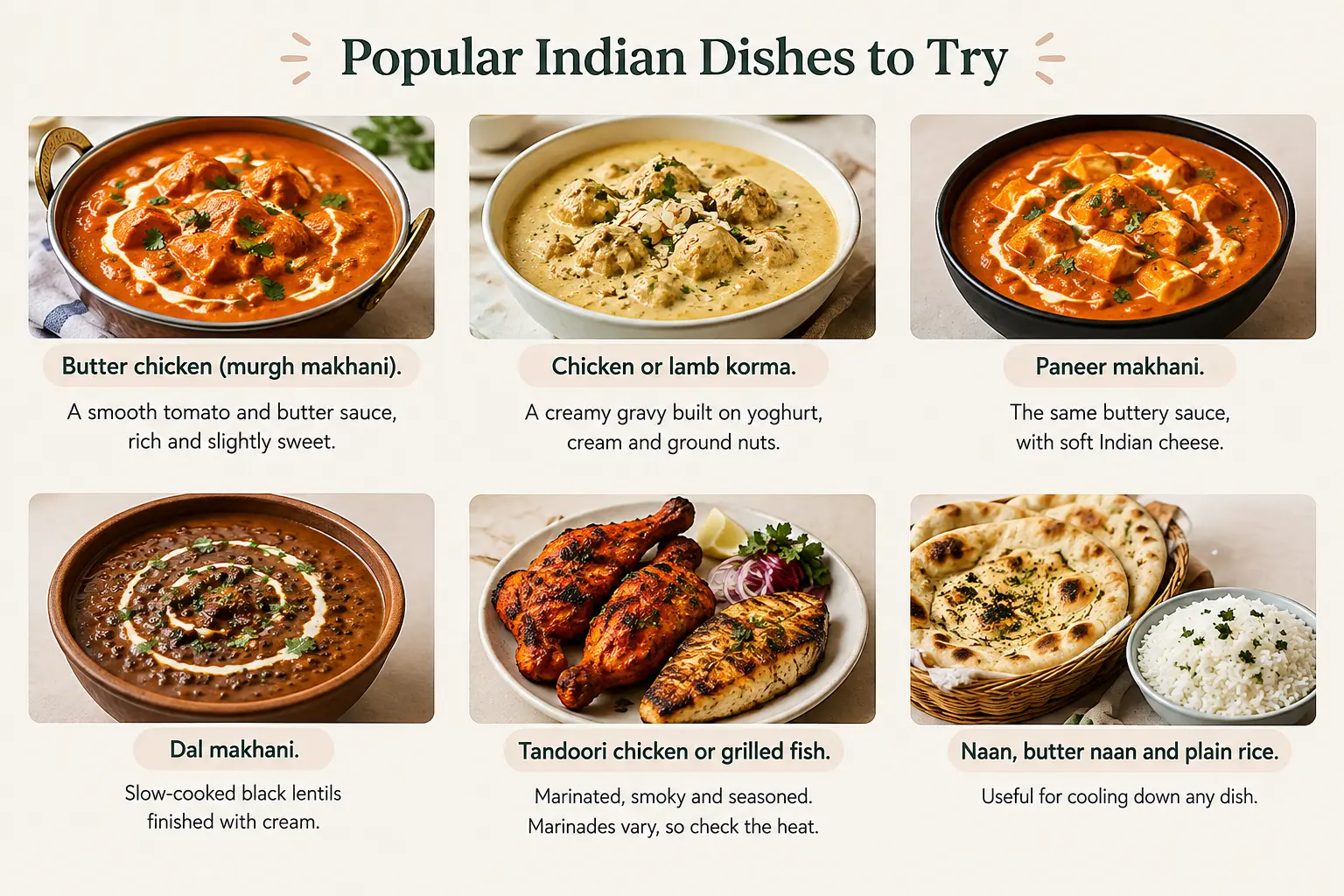
- Butter chicken (murgh makhani). A smooth tomato and butter sauce, rich and slightly sweet.
- Chicken or lamb korma. A creamy gravy built on yoghurt, cream and ground nuts.
- Paneer makhani. The same buttery sauce, with soft Indian cheese.
- Dal makhani. Slow-cooked black lentils finished with cream.
- Tandoori chicken or grilled fish. Marinated, smoky and seasoned. Marinades vary, so check the heat.
- Naan, butter naan and plain rice. Useful for cooling down any dish.
These are among the least spicy Indian dishes on most menus. Chefs still vary, so a quick question to your server helps.
Medium-Spiced Indian Dishes
Medium dishes have a noticeable warmth that builds gently. Most people who enjoy Indian food land here.
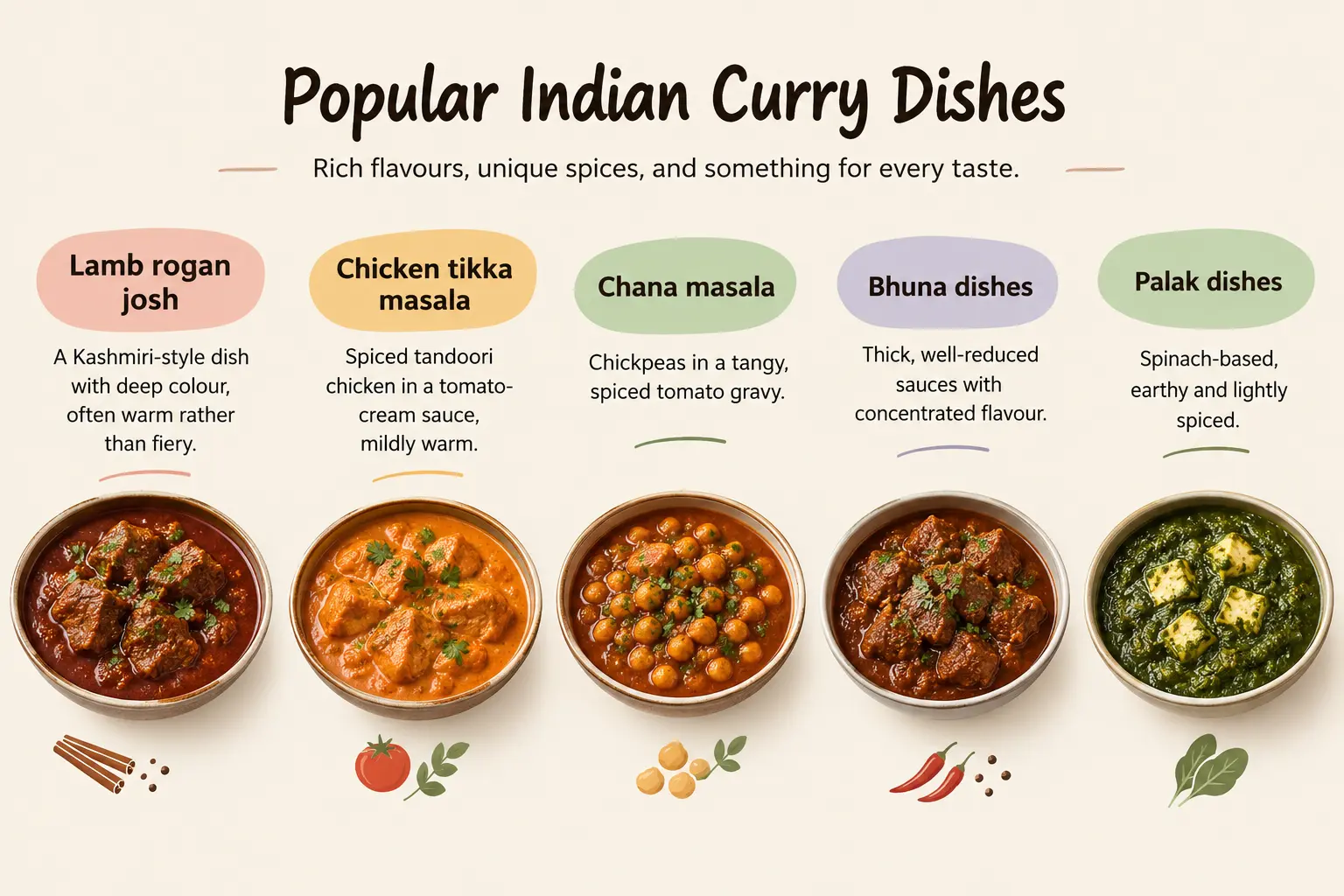
- Lamb rogan josh. A Kashmiri-style dish with deep colour, often warm rather than fiery.
- Chicken tikka masala. Spiced tandoori chicken in a tomato-cream sauce, mildly warm.
- Chana masala. Chickpeas in a tangy, spiced tomato gravy.
- Bhuna dishes. Thick, well-reduced sauces with concentrated flavour.
- Palak dishes. Spinach-based, earthy and lightly spiced.
If you’re building up your tolerance, this band is the natural next step after mild dishes, and it suits Indian food for beginners.
Spicy Indian Dishes for Those Who Like Heat
Some dishes are made to bring real heat. If you enjoy spicy Indian dishes, look for these:
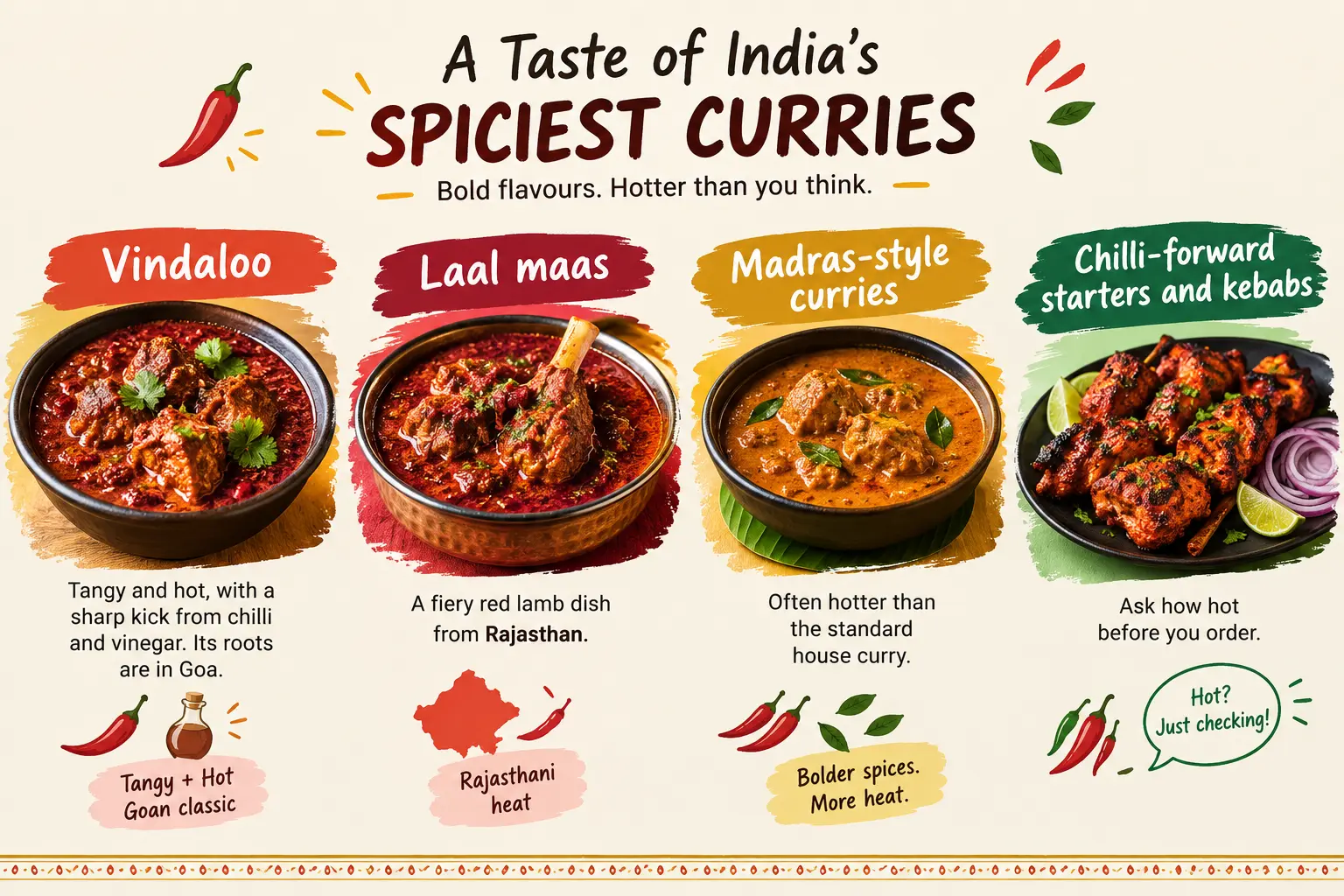
- Vindaloo. Tangy and hot, with a sharp kick from chilli and vinegar. Its roots are in Goa.
- Laal maas. A fiery red lamb dish from Rajasthan.
- Madras-style curries. Often hotter than the standard house curry.
- Chilli-forward starters and kebabs. Ask how hot before you order.
Heat differs from kitchen to kitchen, so “hot” at one restaurant may be “medium” at another. Ask.
How to Order Indian Food If You Don’t Like Spicy Food
You can enjoy a full meal of non spicy Indian food. These steps help:
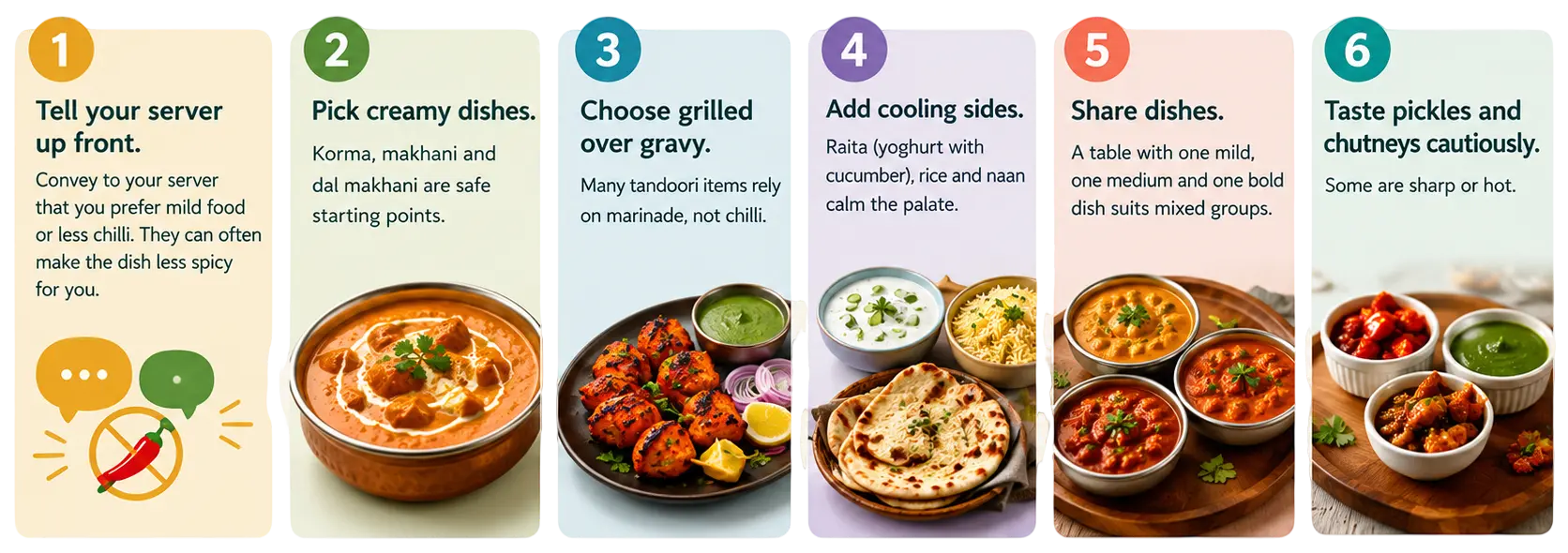
If heat sneaks up on you, reach for yoghurt, raita or bread. Dairy helps because it binds to capsaicin. Water doesn’t help much.
Dining near Leicester Square or Covent Garden? Delhi Brasserie on Frith Street can guide you on heat levels at the table. Book a table.
Are Indian Spices the Same as Chilli Heat?
No. Indian spices are not the same as chilli heat.
Most spices in Indian cooking give aroma, colour and depth: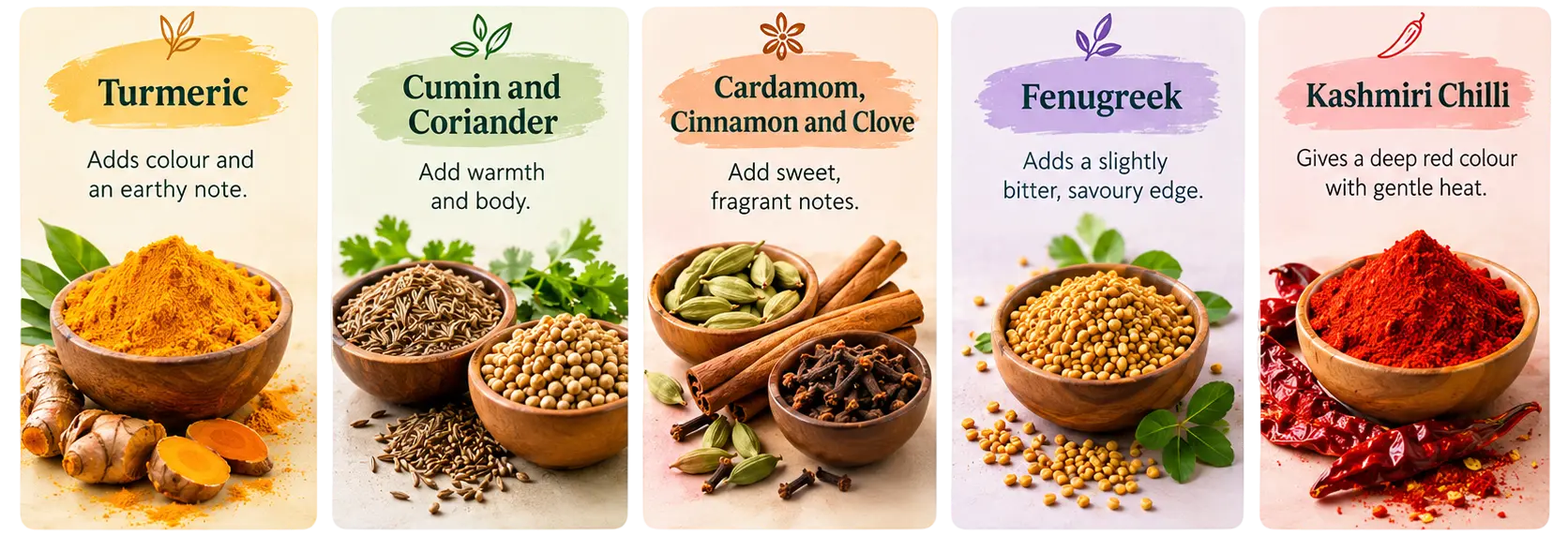
Chilli is a separate ingredient, added in different amounts. That’s why a dish can be deeply spiced and still be mild.
How to Choose an Indian Dish Based on Your Spice Preference
Use this quick guide to Indian food spice levels:
When unsure, order one of the mild Indian dishes and one medium dish to share. You’ll learn your comfort level quickly.
Indian Food for Beginners: What to Order First
Indian food for beginners is easier than it looks. Start simple and build up.
- Begin with a creamy main such as butter chicken or korma.
- Add a tandoori starter to try smoky flavours.
- Order naan and rice to balance richer sauces.
- Ask your server for guidance. Good staff are glad to help.
- Try one new dish each visit.
Delhi Brasserie serves authentic North Indian cuisine on Frith Street in Soho, close to Leicester Square, Piccadilly Circus, Covent Garden and Trafalgar Square. It suits a relaxed dinner or a pre-theatre meal before a West End show. Families, couples and groups are all welcome, and private dining rooms are available for celebrations and business meals.
Still wondering how spicy Indian food will be? Our team can talk you through heat levels at the table, so you get the flavour you want. Book a table at Delhi Brasserie in Soho, or send an enquiry for group and private dining.
Frequently Asked Questions
1. How spicy is Indian food in general?
Indian food ranges from mild to very hot, and most dishes sit in the middle. Heat depends on the dish, the region and the chef.
2. Is Indian food always spicy?
No. Many dishes are mild, creamy or lightly spiced. Heat depends on the dish, the region and the chef.
3. What are the least spicy Indian dishes?
Korma, butter chicken and dal makhani are usually among the least spicy Indian dishes. Plain naan and rice have no heat.
4. Can I eat Indian food if I can’t handle spice?
Yes. Non spicy Indian food is easy to find. Choose creamy or grilled dishes, tell your server your preference, and add raita or bread as cooling sides.
5. How spicy is chicken tikka masala?
It usually sits at level 2 on the Indian curry spice levels above, mild to medium. It has a rich tomato and cream sauce with gentle warmth, though it varies by restaurant.
6. What is the spiciest Indian dish?
Vindaloo and laal maas are often the hottest spicy Indian dishes on menus. Ghost-pepper dishes exist but are rare.
7. What should I drink to cool down spicy food?
Yoghurt-based drinks like lassi help most. Dairy binds to capsaicin. Plain water only gives brief relief.
8. Is curry the same as Indian food?
No. “Curry” is a broad word for saucy dishes. Indian cuisine also includes grilled meats, breads, lentils, rice dishes and snacks.
9. Can I ask the kitchen to make a dish milder?
Often, yes. Tell your server when you order. Many dishes can be adjusted, though some are cooked to a set recipe.


