
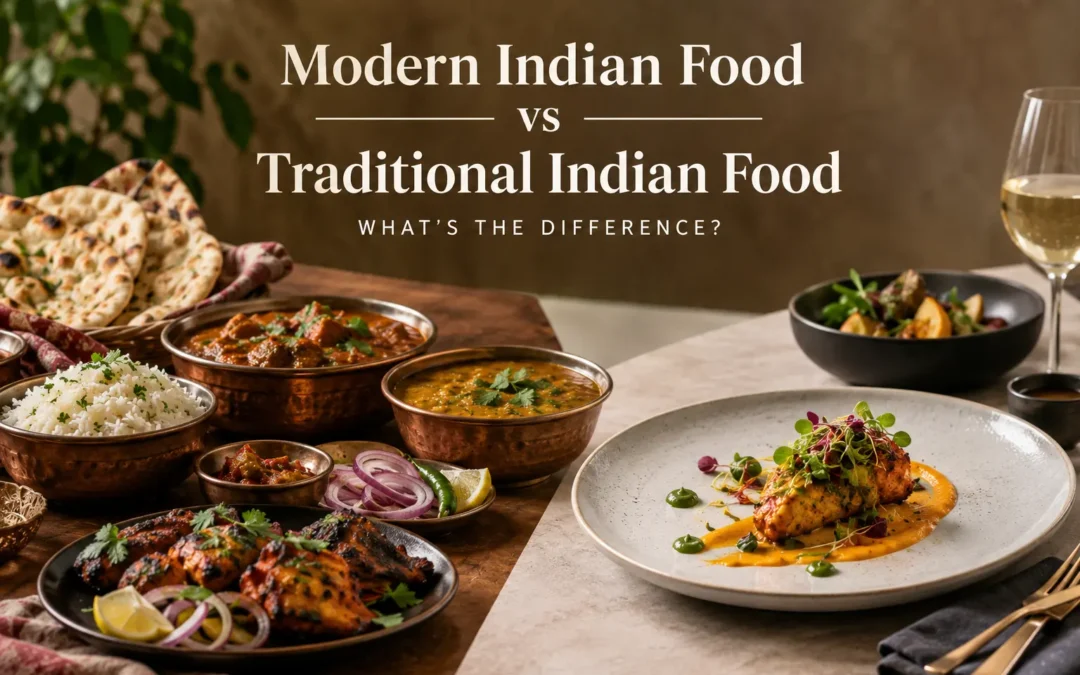
Wondering what separates modern Modern Indian Food vs Traditional Indian Food? Traditional Indian food follows regional family recipes and slow, hands-on methods. Modern Indian cuisine keeps the same flavour roots but changes the technique, the plating and sometimes the ingredients.
Neither style is better. They suit different moods and different tables. This guide explains the real differences, so you can choose well for your next meal in Soho or anywhere in Central London.
Quick Answer: Traditional vs Modern Indian Dishes at a Glance
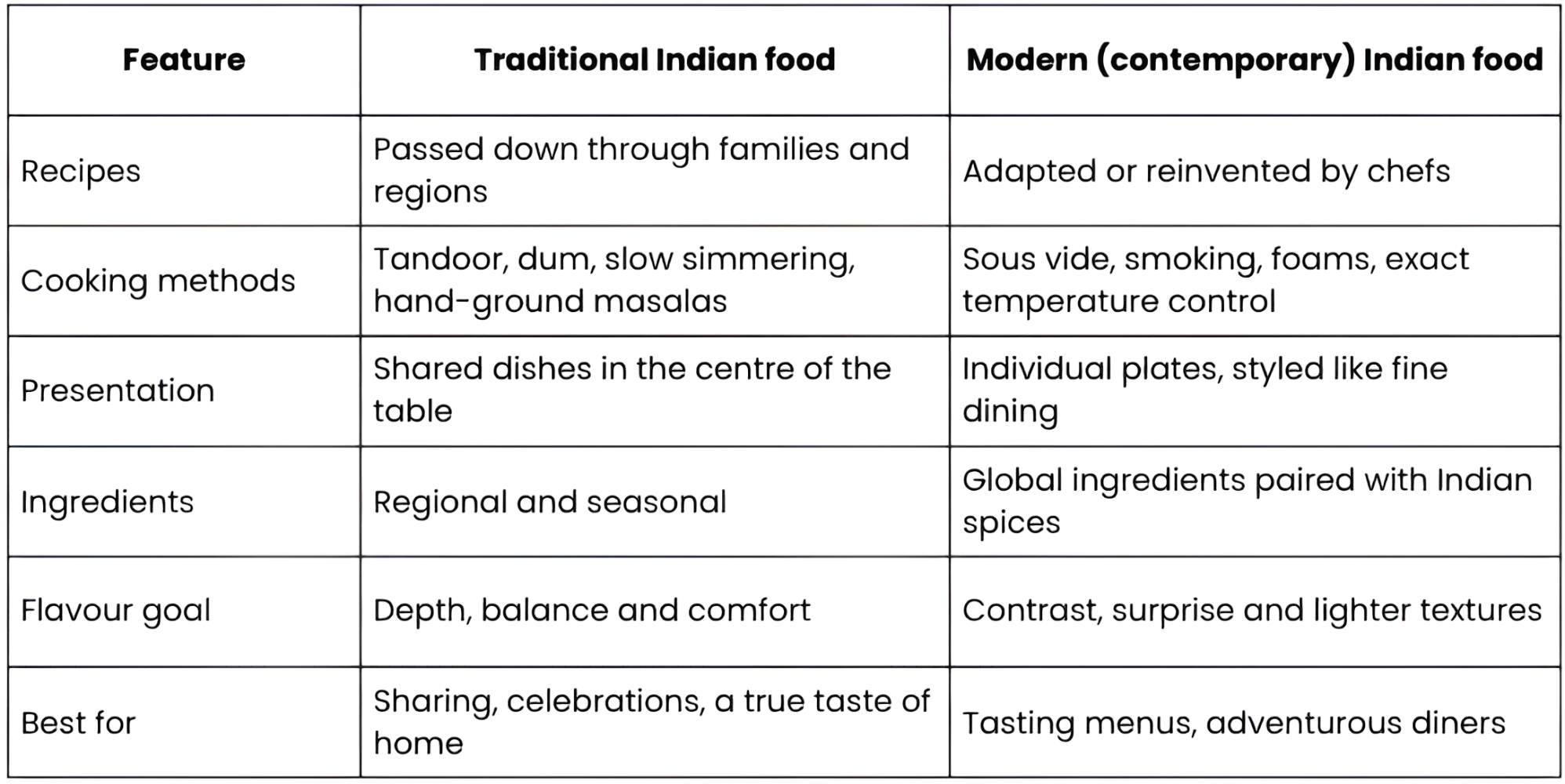
What Is Traditional Indian Food?
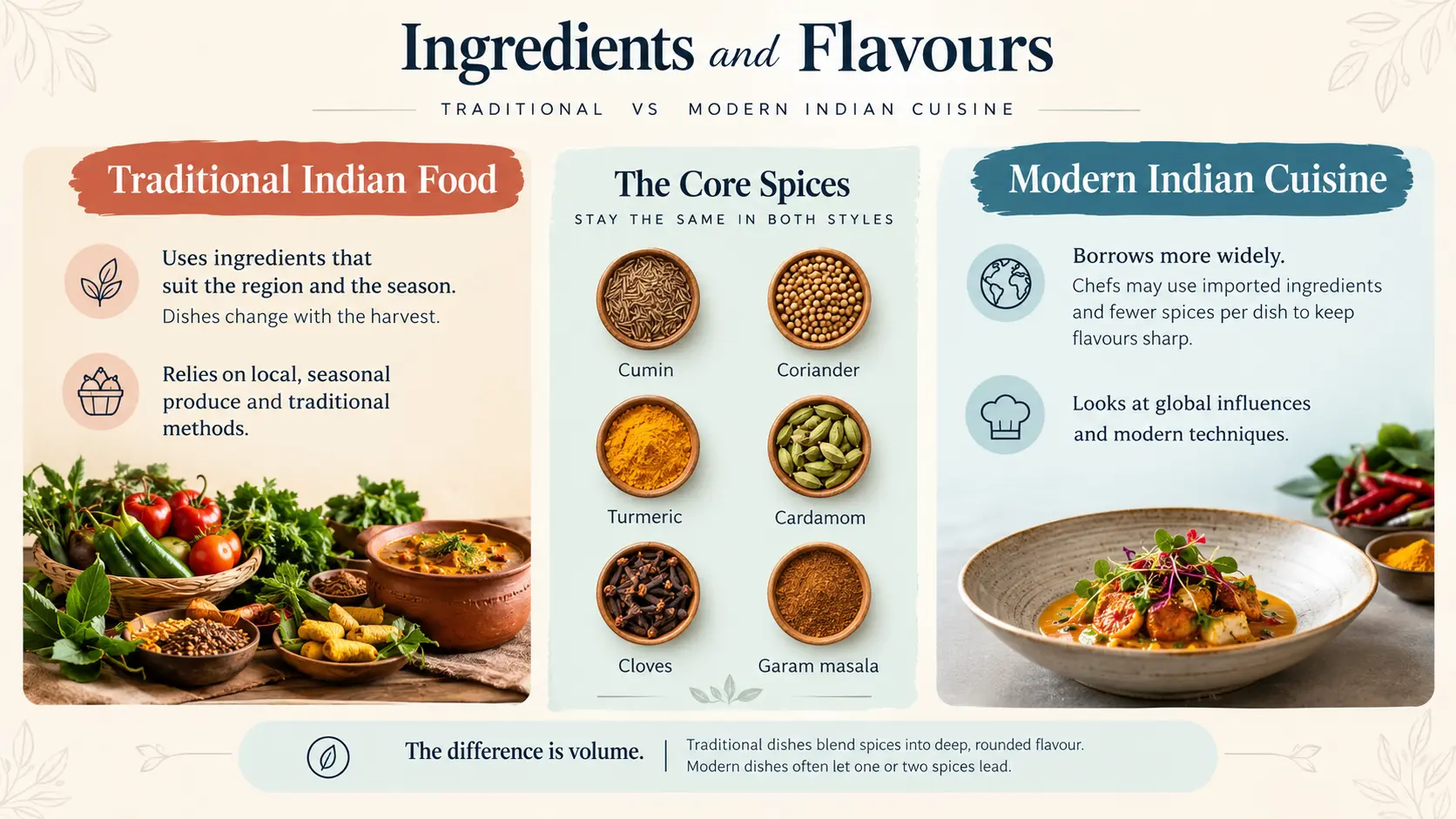
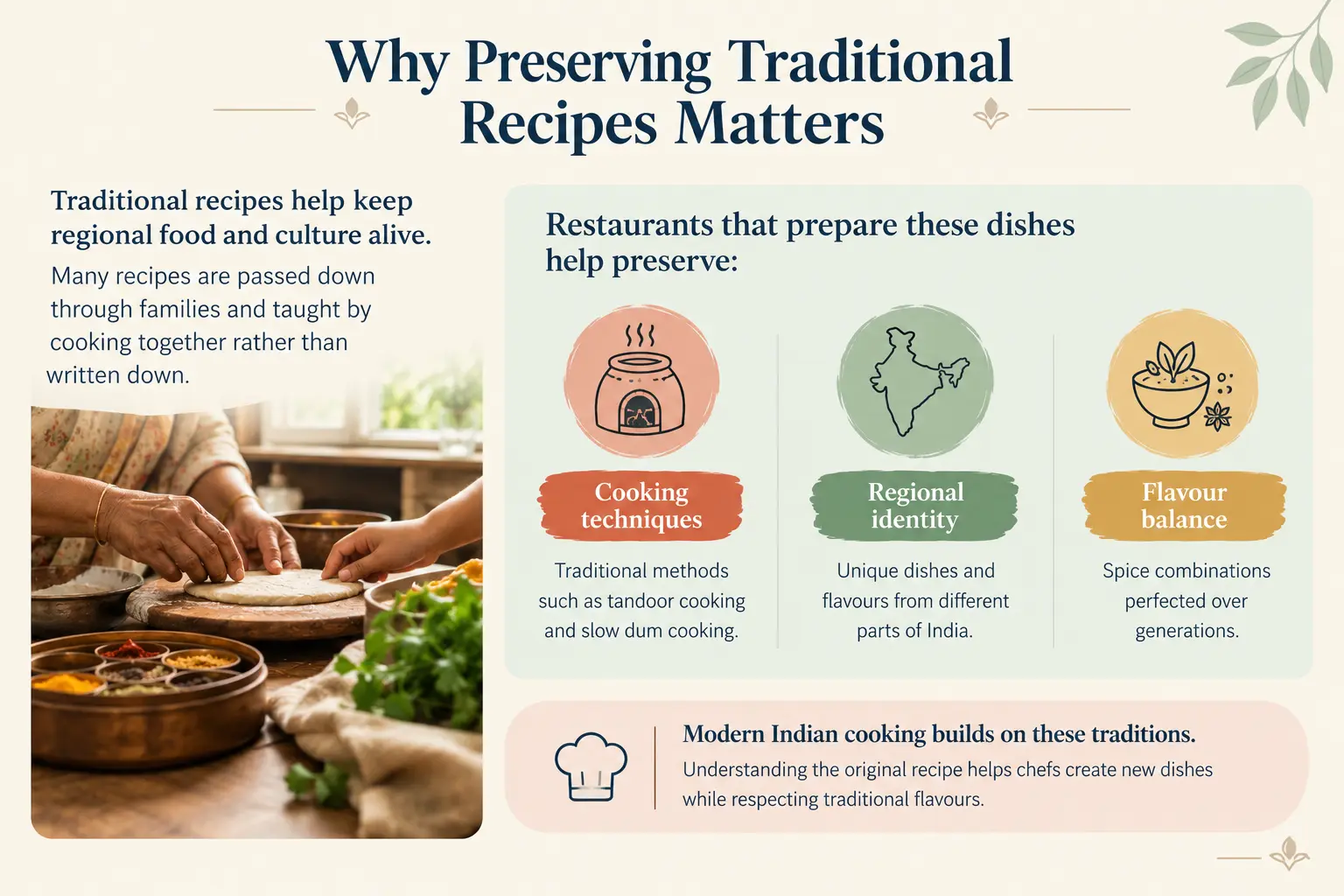
Traditional Indian food is cooking built on regional recipes refined over many generations. The dishes rely on proven spice blends, set cooking times and local produce.
India has no single cuisine. Each region cooks differently:
- North India: Rich gravies, tandoor-baked breads, and dairy such as ghee, paneer and yoghurt.
- South India: Rice, lentils, coconut and tamarind.
- East India: Mustard oil and fish.
- West India: Bold spice, coastal seafood and strong vegetarian traditions.
North Indian food is the style most Londoners know best. It centres on slow-cooked curries, kebabs from the tandoor, and freshly baked naan and roti.
Traditional Indian Cooking Techniques
Traditional Indian cooking depends on time and touch. The cook judges by smell, colour and sound rather than a timer.
- Tandoor cooking: A clay oven heated to a very high temperature. It chars kebabs and bakes bread quickly.
- Dum cooking: Food sealed in a pot and cooked gently in its own steam.
- Bhunao: Frying onions and spices slowly until the oil separates from the masala.
- Tadka (tempering): Whole spices fried in hot ghee or oil, then poured over a dish.
- Hand-grinding spices: Whole spices roasted and ground fresh for stronger flavour.
These methods give classic dishes their layered taste. They cannot be rushed.
What Is Modern Indian Cuisine?
Modern Indian cuisine, also called contemporary Indian cuisine, presents classic Indian flavours in new ways. Chefs may use European techniques, lighter sauces and global ingredients.
The goal is not to replace tradition. The goal is to look at a familiar dish from a different angle.
A modern kitchen might:
- Serve a curry flavour as a light sauce instead of a heavy gravy.
- Cook meat sous vide, then finish it in the tandoor.
- Plate one neat portion rather than a shared bowl.
- Pair Indian spices with ingredients such as game or scallops.
Traditional vs Modern Indian Cooking: The Key Differences
Cooking Techniques
Traditional kitchens use fire, clay and patience. Modern kitchens often add laboratory-style precision.
A traditional cook may simmer dal makhani slowly for hours. A modern chef may cook each part of a dish at a set temperature, then assemble it on the plate.
Both approaches take skill. They use different tools.
Presentation and Serving Style
In traditional Indian dining, dishes arrive together and the table shares them. Rice, bread, dal and a few curries sit in the middle.
Modern Indian restaurants often serve courses one at a time. Each plate is arranged with care, and portions are smaller.
Cultural Context
Traditional Indian food is tied to festivals, family gatherings and religious customs. Diwali sweets, wedding feasts and Sunday family meals each have their own dishes.
Modern Indian food is shaped more by restaurant culture, travel and the global food scene. It speaks to diners who want something unexpected.
How Indian Food Has Evolved in Britain
Indian food has a long history in the UK. According to The Staff Canteen, Veeraswamy opened in 1926 and is the UK’s oldest surviving Indian restaurant.
Growth came later. Al Jazeera (2019) reports that migration from South Asia rose in the 1960s, and hundreds of restaurants opened across Britain. Many were run by people from the Sylhet region of Bangladesh.
The market has since changed. Wikipedia’s overview of curry in the UK notes that curry houses peaked at around 12,000 in 2016 and fell to roughly 8,000 by 2023.
At the same time, a newer group of restaurants has grown. Al Jazeera describes London restaurants such as the Cinnamon Club serving regional, high-end Indian dishes. The Staff Canteen adds that upmarket Indian restaurants have won Michelin stars.
This shift shows two things:
- Diners now ask for regional, authentic cooking rather than one generic “curry”.
- Chefs now treat Indian cuisine as fine dining.
Which Style Should You Choose?
Choose the style that fits the occasion.
Traditional Indian food suits you if you:
- Want rich, comforting flavours.
- Are dining with family or a group and want to share dishes.
- Prefer North Indian favourites such as tandoori kebabs, dal and fresh bread.
Modern Indian food suits you if you:
- Enjoy tasting menus and new flavour pairings.
- Like smaller, carefully plated portions.
- Want to try Indian spices in an unfamiliar form.
Many diners enjoy both. A good restaurant lets you order the classics and still try something new.
Traditional North Indian Dining in Soho, London
If you want the traditional side, Delhi Brasserie serves authentic North Indian cuisine on Frith Street in Soho, in the West End. It is a short walk from Leicester Square, Piccadilly Circus, Covent Garden, Trafalgar Square and Oxford Street, so it suits a meal before or after a show in Theatreland.
People book Delhi Brasserie for:
- Pre-theatre and post-theatre dining
- Couples’ dinners and anniversaries
- Family meals
- Business lunches and client dinners
- Birthday celebrations and party menus
- Private dining rooms and group bookings
Ready to book? Reserve a table or ask about private dining at delhibrasserie.com.
Frequently Asked Questions
1. What is the main difference between modern Indian food and traditional Indian food?
Traditional Indian food follows regional recipes and slow, hands-on methods such as tandoor cooking and dum. Modern Indian food keeps the flavours but changes the technique, the presentation and sometimes the ingredients.
2. What is modern Indian cuisine?
Modern Indian cuisine, also called contemporary Indian cuisine, reimagines classic dishes with new techniques, lighter sauces and styled plating. It is often served as individual courses.
3. Is traditional Indian food healthier than modern Indian food?
Not necessarily. Healthiness depends on the dish, not the style. Tandoori grills, dal and vegetable dishes are lighter choices in either style. Creamy gravies are richer in both.
4. Is North Indian food the same as traditional Indian food?
No. North Indian food is one regional tradition. India also has South, East and West Indian cuisines, each with its own ingredients and methods.
5. What are the main traditional Indian cooking techniques?
The main techniques are tandoor cooking, dum (slow steam cooking), bhunao (slow frying of masala), tadka (tempering spices in hot fat) and grinding spices by hand.
6. Why do some restaurants serve Indian food in small, plated portions?
Plated portions are a feature of modern and fine dining. They let chefs control the look, balance and pacing of each course. Traditional Indian meals are usually shared from central dishes.
7. Is Delhi Brasserie traditional or modern Indian?
Delhi Brasserie focuses on authentic, traditional North Indian cuisine in Soho. The setting is elegant and welcoming, and it suits fine dining, celebrations and group meals.
8. Can I book a private dining room or a pre-theatre table at Delhi Brasserie?
Yes. Delhi Brasserie offers private dining rooms, group bookings, and pre- and post-theatre dining. Book through delhibrasserie.com or contact the restaurant for group and party menus.


