
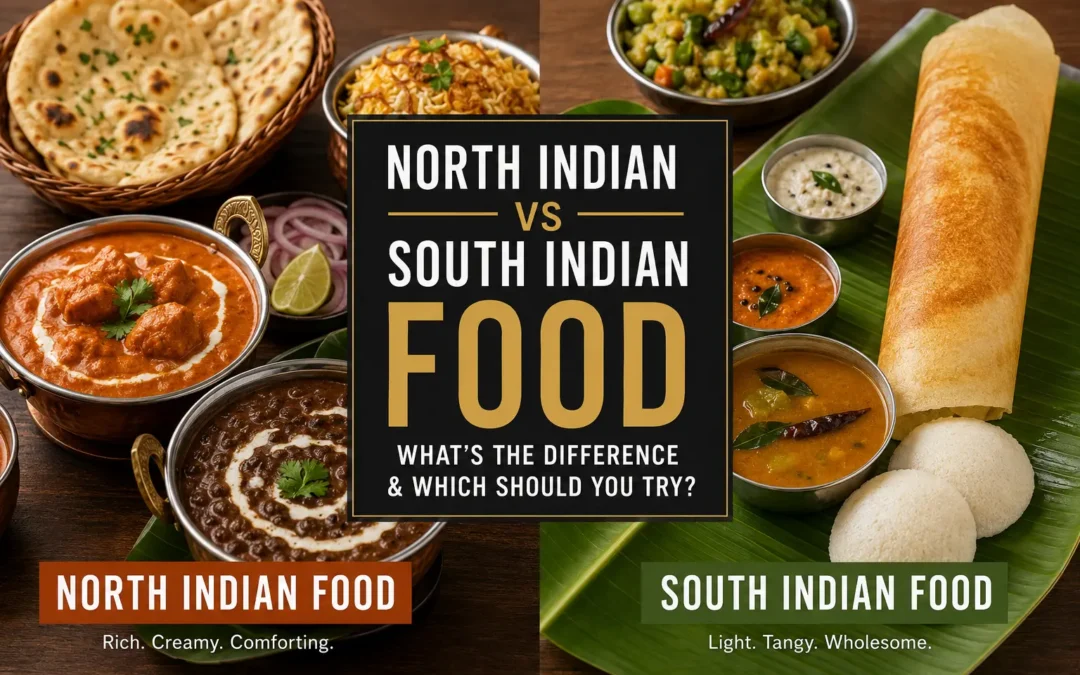
Ever wondered why north indian vs south indian Food tastes so different from one restaurant to the next? That’s because India doesn’t have one cuisine – it has many. North Indian and South Indian food are two of the most distinct, and they differ in almost every way: ingredients, cooking methods, flavours, and even the way food is served.
If you’re in London and curious about Indian food regional differences, this guide breaks it all down clearly – and helps you decide what to try first.
What Is North Indian Food?
North Indian food comes from states like Punjab, Rajasthan, Uttar Pradesh, Delhi, and Kashmir. This region has a long history of Mughal influence, which shaped much of the cooking style you’ll find in Indian restaurants across the world today.
Key characteristics of North Indian food:
- Rich, creamy gravies — made with dairy: cream, ghee, paneer, and yoghurt
- Tandoor cooking — clay oven techniques for breads and marinated meats
- Wheat-based staples — roti, naan, paratha, and kulcha
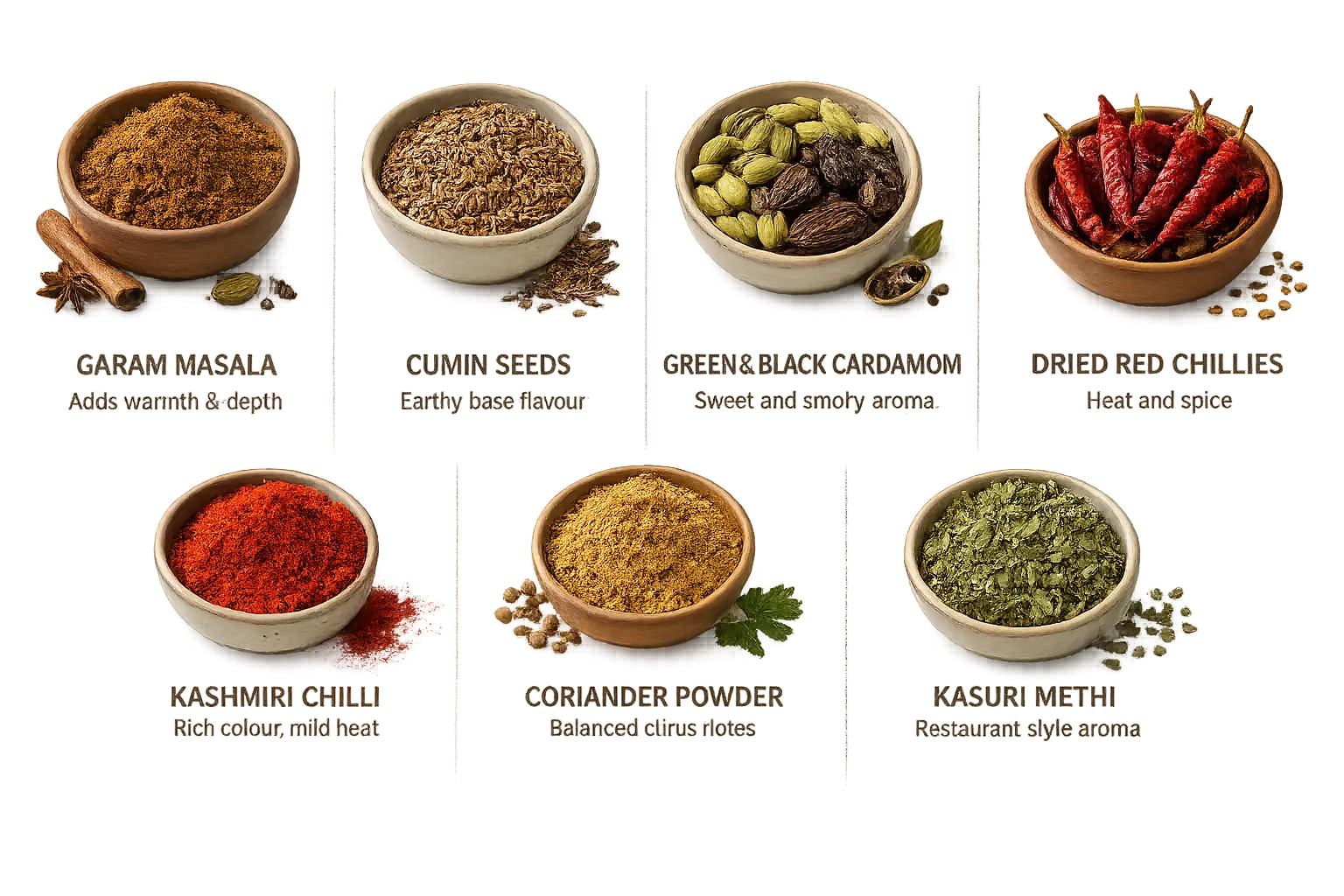
- Bold, warming spices — cumin, coriander, cardamom, garam masala, and dried chillies
- Slow-cooked meat dishes — like Butter Chicken, Rogan Josh, and Nihari
- Lentil dishes (dal) — such as Dal Makhani, slow-cooked with butter and cream
The flavour profile of North Indian cuisine tends to be rich, hearty, and mildly spiced -though dishes like Laal Maas (Rajasthani red meat curry) can be fiercely hot.
North Indian food is also deeply rooted in the Mughal culinary tradition. Dishes like Biryani, Seekh Kebab, and Shahi Paneer all trace their roots to royal Mughal kitchens, where Persian and Central Asian cooking techniques were blended with Indian spices.
What Is South Indian Food?
South Indian food comes from states like Tamil Nadu, Kerala, Karnataka, Andhra Pradesh, and Telangana. It developed in a very different geography – tropical coastlines, rice paddies, and spice plantations – which shaped an entirely distinct culinary identity.
Key characteristics of South Indian food:
- Rice-based staples — steamed rice, idli, dosa, and appam replace wheat-based breads
- Fermented foods — dosa and idli batter is fermented, adding a natural tang
- Coconut — used generously in curries, chutneys, and cooking oils
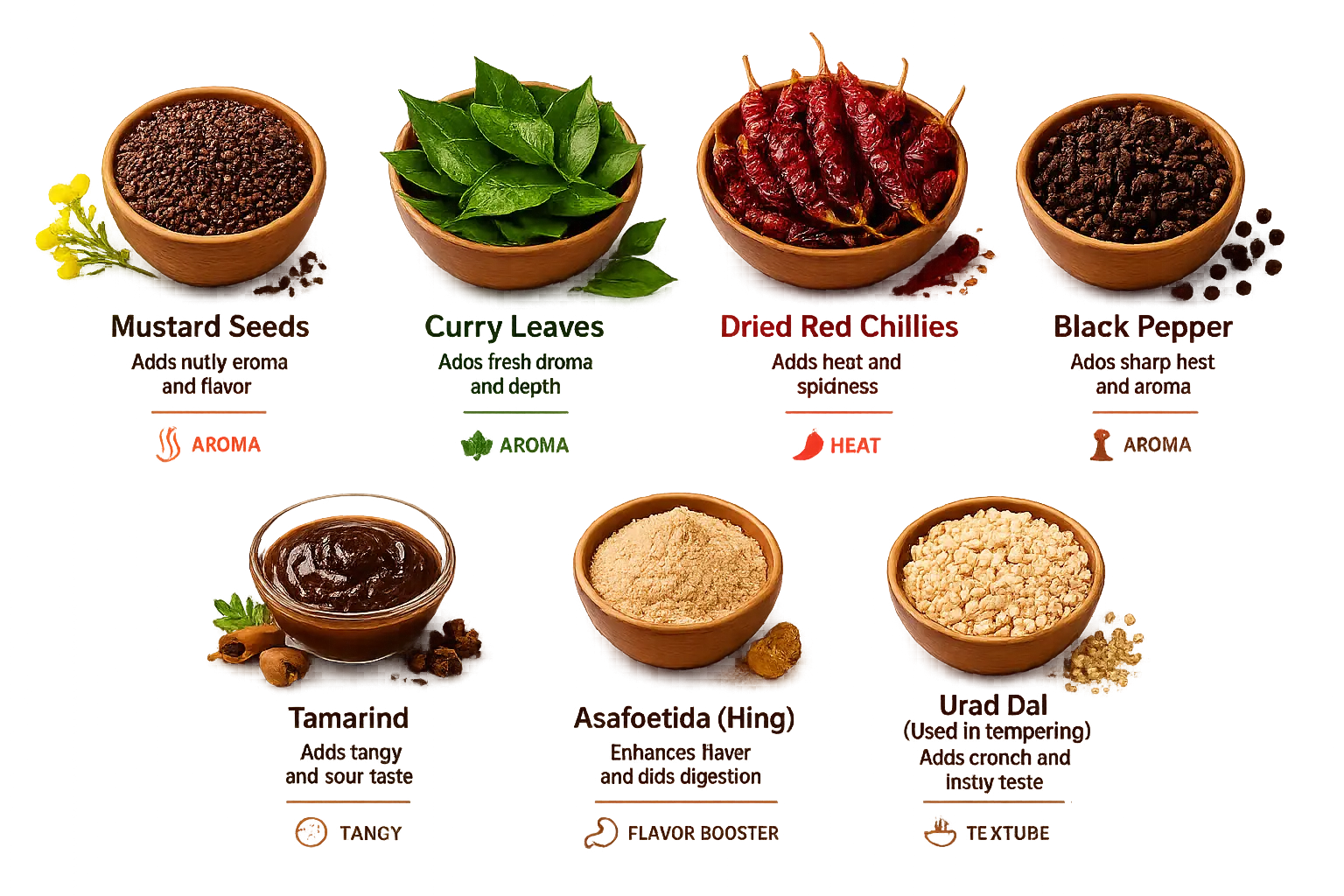
- Tamarind and curry leaves — two flavour anchors you rarely find in North Indian cooking
- Lighter, spicier heat — particularly in Chettinad and Andhra-style dishes
- Seafood prominence — Kerala’s Malabar coast cuisine is famous for fish and prawn curries
- Mustard seeds in tempering (tadka) — a signature technique in South Indian cooking
South Indian food is generally lower in dairy, higher in fibre, and uses fermentation as a natural preservation and flavour-building technique. It’s considered one of the more gut-friendly cuisines in the Indian food canon.
The Core Differences: North Indian vs South Indian Food
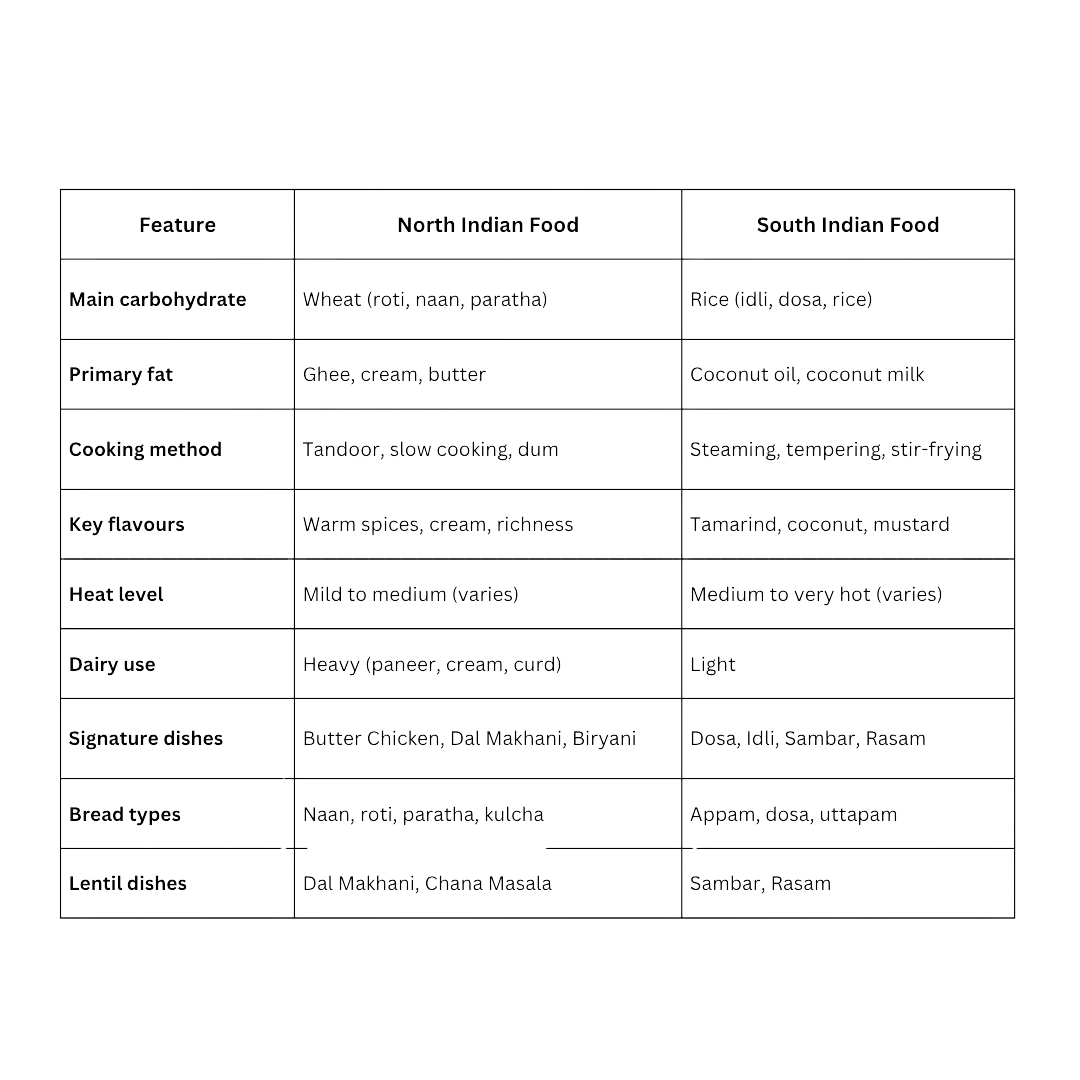
Here’s a clear side-by-side comparison to help you understand the difference between North Indian and South Indian food:
Spices: How They Differ Between Regions
Both cuisines use spices heavily, but the spice profiles are very different.
North Indian spice pantry:
South Indian spice pantry:
In North Indian cooking, spices are often bloomed in oil or ghee first and then added to a tomato-onion gravy base. In South Indian cooking, the tempering (called tadka or tarka) typically happens at the end of cooking and is poured directly over the finished dish — a technique called baghar in some regions.
Breads vs Rice: The Fundamental Divide
A major distinction between North and South Indian cuisine lies in the primary carbohydrate source used in daily meals.
North India is part of the Indo-Gangetic Plain, a fertile wheat-growing belt. Bread-making became central to the diet here. The tandoor – a cylindrical clay oven – became the method for cooking flatbreads quickly at high heat.
South India, by contrast, lies in a tropical climate ideal for rice cultivation. For thousands of years, rice has played a central role in human diets. Instead of bread, South Indians developed rice-based preparations like:
- Idli — steamed rice and lentil cakes
- Dosa — thin, crispy fermented rice crepes
- Appam — soft, lacy rice pancakes popular in Kerala
- Uttapam — thicker fermented rice pancakes with toppings
- Pongal — a savoury rice and lentil porridge
This bread-vs-rice distinction alone explains why meals feel so different in structure and texture.
Meat, Fish, and Vegetarian Options
North Indian cuisine is known for its meat dishes — particularly lamb, chicken, and goat. However, the region also has a strong vegetarian tradition, particularly in Rajasthan and among Hindu Brahmin communities.
Popular North Indian meat dishes:
- Butter Chicken (Murgh Makhani)
- Rogan Josh (slow-cooked lamb)
- Seekh Kebab (minced lamb skewers)
- Nihari (slow-braised beef or lamb)
- Chicken Tikka Masala
Popular North Indian vegetarian dishes:
- Paneer Butter Masala
- Dal Makhani
- Palak Paneer
- Chole (spiced chickpeas)
- Aloo Gobi
South Indian food has a strong vegetarian core. Tamil Nadu Brahmin cuisine, for example, is entirely vegetarian. Across the region, lentils and vegetables form the backbone of daily eating.
However, coastal South India is famous for seafood. Kerala’s fish curries — made with coconut milk and raw mango — are considered some of the finest in the world.
Popular South Indian dishes:
- Chettinad Chicken Curry (Tamil Nadu)
- Kerala Fish Curry
- Prawn Moilee (Kerala)
- Hyderabadi Biryani (Andhra Pradesh/Telangana)
- Avial (mixed vegetable coconut curry, Kerala)
Sauces, Gravies, and Chutneys
The sauce and condiment cultures are completely different between the two regions.
In North Indian cooking, gravies are built on a base of fried onions, tomatoes, and ginger-garlic paste, then enriched with cream or yoghurt. This gives them their characteristic thick, orange-red colour and velvety texture.
In South Indian cooking, the equivalent is sambar — a thin, tamarind-based lentil soup packed with vegetables. It’s served alongside rice, dosa, and idli almost every meal. Rasam is a lighter, more peppery version, sometimes used as a digestive.
South Indian food also features an array of chutneys — fresh coconut chutney, tomato chutney, and coriander chutney — served as dips alongside rice dishes and snacks.
Regional Dishes Worth Knowing
To truly understand the difference between North Indian and South Indian food, it helps to know the landmark dishes from each region.
North Indian Landmark Dishes
- Butter Chicken — Originally from Delhi, this mild, creamy tomato-based chicken curry became one of the most popular Indian dishes globally
- Dal Makhani — Black lentils slow-cooked overnight with butter and cream; a staple of Punjabi cooking
- Rogan Josh — A Kashmiri lamb curry fragrant with whole spices and Kashmiri chilli
- Tandoori Chicken — Chicken marinated in yoghurt and spices, cooked in a clay tandoor oven
- Chole Bhature — Spiced chickpeas served with deep-fried puffed bread; a Punjab street food classic
- Biryani (Lucknavi/Awadhi style) — Fragrant dum-cooked rice with meat, layered and sealed with dough for slow steaming
South Indian Landmark Dishes
- Masala Dosa — Crispy rice crepe filled with spiced potato; arguably South India’s most famous dish
- Hyderabadi Biryani — Spicier than its Northern cousins; made with basmati rice and meat or vegetables using dum cooking
- Kerala Sadya — A traditional vegetarian feast served on a banana leaf with 20+ small dishes
- Chettinad Chicken — A boldly spiced dry curry from Tamil Nadu using freshly ground spice blends
- Idli Sambar — Steamed rice cakes with lentil soup; a staple breakfast across South India
Is One Healthier Than the Other?
Both cuisines offer genuine nutritional value, but the profiles differ.
North Indian food:
- Higher in dairy (good source of calcium and protein)
- Richer in saturated fats from ghee and cream
- Wheat-based dishes provide sustained energy
- Lentil dishes are high in plant-based protein
South Indian food:
- Rice-based, generally lower in gluten
- Fermented foods (idli, dosa) support gut health through natural probiotics
- Coconut is high in medium-chain fatty acids
- Lower in dairy, which suits lactose-intolerant diets
- Tamarind contains powerful antioxidants and supports healthy digestion.
Neither cuisine is universally “healthier” — it depends on the specific dish and portion. Both can form part of a balanced diet when chosen thoughtfully.
Why Delhi Brasserie Focuses on North Indian Cuisine
At Delhi Brasserie, the menu draws deeply from the North Indian culinary tradition-specifically the royal kitchens of Old Delhi and the refined cooking culture of the Indo-Gangetic heartland.
The restaurant takes its name from Delhi itself, a city that has been a cultural and culinary crossroads for centuries. Mughal emperors, Punjabi traders, and Awadhi chefs all left their mark on Delhi’s food culture, and that layered history is what inspires the dishes at Delhi Brasserie.
Located in the heart of Soho, London, Delhi Brasserie brings classic North Indian flavours to Central London — with dishes like Butter Chicken, Dal Makhani, Seekh Kebab, and slow-cooked lamb curries prepared with traditional techniques and high-quality British-sourced ingredients.
If you’re near Soho, Covent Garden, Leicester Square, or the West End and looking for authentic Indian food in London, Delhi Brasserie offers the full depth of North Indian fine dining in an elegant, welcoming setting.
Which Should You Try First?
Here’s a simple guide based on what you’re looking for:
Try North Indian food first if you:
- Love rich, creamy gravies
- Enjoy bread (naan, roti, paratha)
- Prefer mildly spiced food with complex flavour layering
- Want tandoor-cooked meats and kebabs
- Are new to Indian cuisine and want a familiar entry point
Try South Indian food first if you:
- Prefer lighter, rice-based meals
- Enjoy tangy, bold flavours
- Like fermented foods
- Are lactose-intolerant or prefer less dairy
- Want to explore street food flavours like dosa and idli
If you’re dining in London and want to experience the best of North Indian cuisine, Delhi Brasserie in Soho is an excellent place to start.
Final Thoughts
North Indian and South Indian food are both extraordinary — but they are genuinely different cuisines with different ingredients, cooking traditions, flavour philosophies, and cultural roots.
North Indian food is warm, rich, and built on dairy, wheat, and tandoor cooking. South Indian food is lighter, tangier, and anchored in rice, coconut, and fermentation.
Understanding these differences makes eating Indian food far more rewarding. You stop ordering at random and start choosing with purpose.
If you’re in London and want to experience the depth of North Indian cooking done well, Delhi Brasserie in Soho is worth a visit. The menu reflects the cooking traditions of Old Delhi — one of India’s most important culinary cities — brought to life in the heart of the West End.
Book a table at Delhi Brasserie, Soho, London — fine North Indian dining close to Leicester Square, Covent Garden, Oxford Street, and Piccadilly Circus.
Frequently Asked Questions
1. What is the main difference between North Indian and South Indian food?
The biggest difference is the staple carbohydrate. North Indian food is built around wheat-based breads like naan and roti, while South Indian food centres on rice and fermented rice preparations like dosa and idli. North Indian cuisine also uses more dairy — cream, ghee, and paneer — while South Indian cooking relies on coconut oil and coconut milk. The spice profiles and cooking techniques are also distinct.
2. Which cuisine typically uses more spices: North Indian or South Indian food?
Not necessarily. South Indian food, especially from Andhra Pradesh and the Chettinad region of Tamil Nadu, can be extremely hot. North Indian food tends to be richer and more aromatic than intensely hot. However, the level of spiciness can differ greatly depending on the region and the specific dish.
3.What is the most popular North Indian dish?
Butter Chicken (Murgh Makhani) is arguably the most recognised North Indian dish globally. It was created in Delhi and is now served in Indian restaurants worldwide. Dal Makhani, Rogan Josh, and Tandoori Chicken are also iconic North Indian dishes.
4.What are typical South Indian dishes?
The most well-known South Indian dishes include Masala Dosa, Idli Sambar, Kerala Fish Curry, Hyderabadi Biryani, and Chettinad Chicken Curry. South Indian cuisine also includes a wide range of vegetarian dishes, particularly in Tamil Nadu and Karnataka.
5. Do North and South Indian restaurants serve different types of bread?
Yes. North Indian restaurants typically serve naan, roti, paratha, and kulcha — all wheat-based flatbreads, often baked in a tandoor. South Indian restaurants serve dosa, appam, and uttapam — which are all made from fermented rice and lentil batter, not wheat.
4. Is South Indian food suitable for vegetarians and vegans?
Yes. South Indian food has one of the strongest vegetarian traditions in India. Many South Indian dishes are naturally vegan — dishes like dosa, idli, sambar, and rasam contain no dairy. It’s considered one of the more vegan-friendly regional Indian cuisines.
5. Where can I find authentic North Indian food in London?
Delhi Brasserie in Soho, Central London, is one of the most established North Indian restaurants in the West End. Located close to Leicester Square, Covent Garden, and Piccadilly Circus, it serves traditional North Indian dishes in a fine dining setting. Visit delhibrasserie.com for menus, reservations, and more information.
6. Can I find both North and South Indian dishes at the same restaurant?
Some Indian restaurants in London offer a pan-India menu with dishes from multiple regions. However, specialist restaurants tend to do one regional cuisine better. Delhi Brasserie focuses on North Indian cuisine, which means dishes like Butter Chicken, Seekh Kebab, and Dal Makhani are the main focus — cooked with the depth and care that specialisation allows.


