
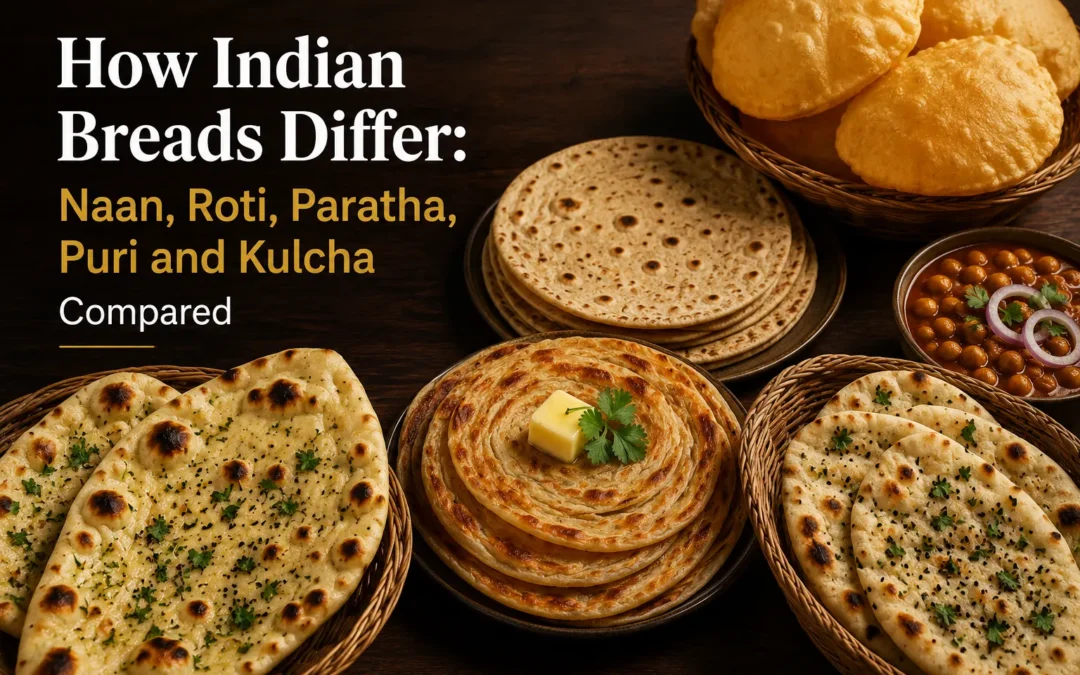
Ever wondered why the bread at an Indian restaurant tastes so different each time you order? That’s because Indian breads are not one-size-fits-all. Each type – whether it’s soft, pillowy naan or a crispy, golden puri – has its own flour, cooking method, and flavour character.
India has over 30 distinct types of bread. Some are leavened with yeast or yoghurt. Others are simple, unleavened flatbreads cooked in seconds on a hot griddle. A few are deep-fried to order. Understanding these differences transforms how you eat Indian food — and how you pair each bread with the right dish.
Here’s everything you need to know about the most popular types of Indian bread.
What Makes Indian Breads Different from Each Other?
The key distinctions between Indian breads can be traced to three main factors:
- The flour used – whole wheat (atta), refined white flour (maida), or a mix
- Whether it’s leavened or unleavened – leavened breads use yeast, yoghurt, or baking powder to rise; unleavened breads use none
- The cooking method -ntandoor oven, tawa (griddle), or deep-fried in oil
These three variables produce a surprisingly wide range of textures, flavours, and uses.
Roti (Chapati) — The Everyday Flatbread
Roti is the most widely eaten bread in India. It appears on the table at millions of households every single day.
What it’s made from: Whole wheat flour (atta), water, and a pinch of salt. No yeast. No dairy. No fat added to the dough.
How it’s cooked: On a tawa — a flat iron griddle — over a high flame. Many home cooks finish roti directly over the flame, which causes it to puff up briefly.
What it tastes like: Mild and slightly nutty, with a thin, soft texture. It’s light enough that you can eat several alongside a meal without feeling heavy.
Best paired with: Almost anything. Dal, dry vegetable dishes, paneer curries, and lentil soups all work beautifully with roti.
Chapati flour (atta) is finely milled from whole wheat grains, giving roti a slightly earthy, wholesome flavour that refined flour simply can’t replicate.
Quick fact: Roti and chapati are the same bread. The word chapat means “slap” in Hindi — a reference to the way dough is shaped by hand.
Naan — The Tandoor-Baked Classic
Naan is probably the most recognised Indian bread outside of India. It’s the one most people try first at a restaurant, and for good reason — it’s soft, chewy, and deeply satisfying.
What it’s made from: Refined white flour (maida), yeast or baking powder, yoghurt, and sometimes milk or egg. The dairy content is what makes naan so tender.
How it’s cooked: In a tandoor — a cylindrical clay oven fired with wood or charcoal that reaches temperatures between 400°C and 480°C. The raw dough is slapped against the inner walls of the tandoor and bakes in minutes.
What it tastes like: Soft, slightly chewy, with a light char and a mild tang from the yoghurt. When brushed with butter or ghee after cooking, it becomes rich and aromatic.
Best paired with: Butter chicken, lamb rogan josh, dal makhani, or any rich curry. The soft, absorbent texture is ideal for scooping thick gravies.
Note on tandoori roti vs naan: Tandoori roti is baked in the same tandoor oven as naan, but uses whole wheat flour and no dairy. It’s lighter and slightly less rich, making it a popular choice for those who want the tandoor flavour without the indulgence.
Paratha — The Flaky, Layered Flatbread
Paratha is roti’s more indulgent cousin. The key difference is fat — ghee or oil is folded into the dough and used generously while cooking, creating distinct, flaky layers.
What it’s made from: Whole wheat flour (atta), water, ghee or oil. The dough is rolled, coated in ghee, folded, and rolled again — similar to the laminating technique used in puff pastry.
How it’s cooked: On a tawa, shallow-fried with ghee or oil until both sides are golden and crisp.
What it tastes like: Rich, buttery, and slightly crispy on the outside with a soft interior. Plain parathas have a beautiful layered texture. Stuffed parathas add another dimension of flavour entirely.
Common stuffed paratha varieties:
- Aloo paratha – spiced mashed potato filling, a North Indian breakfast staple
- Gobi paratha – spiced grated cauliflower
- Paneer paratha – crumbled cottage cheese with herbs and chilli
- Methi paratha – made with fresh fenugreek leaves in the dough
Best paired with: Yoghurt, raita, pickles, or a cup of chai. A stuffed paratha is often a complete meal on its own, particularly at breakfast.
Puri — The Deep-Fried, Puffed Bread
Puri (also spelled poori) is unlike any other Indian bread. It’s deep-fried, not griddled or baked, and it puffs up into a golden hollow balloon when it hits the hot oil.
What it’s made from: Whole wheat flour (atta), water, and salt. The dough is stiff and rolled into small, flat discs before frying.
How it’s cooked: Submerged in hot oil. The dough puffs up almost instantly due to steam trapped inside.
What it tastes like: Crispy on the outside, airy and soft inside. It has a mild flavour that works well with both savoury and mildly sweet accompaniments.
When it’s traditionally served:
- At festivals, weddings, and religious ceremonies
- As a breakfast dish with chole (spiced chickpea curry) or aloo sabzi (potato curry)
- During Navratri, when many households serve puri with halwa and chana
Best paired with: Chole (chickpea curry), aloo curry, halwa (sweet semolina dessert), or pickles.
Puri is celebratory food. In Indian households, seeing puri on the table usually means something special is happening.
Kulcha — Naan’s Softer, More Versatile Sibling
Kulcha looks similar to naan but has a different character. It’s leavened without yeast — typically using yoghurt, baking powder, or baking soda instead — which gives it a softer, slightly denser texture.
What it’s made from: Refined flour (maida), yoghurt, baking powder or baking soda, and salt.
How it’s cooked: Traditionally in a tandoor, but unlike naan, kulcha can also be cooked on a tawa or griddle. This flexibility makes it more accessible to prepare outside a restaurant setting.
What it tastes like: Soft, mild, and slightly doughy. Plain kulcha has a gentle flavour that absorbs curry sauces well. Stuffed kulcha is richer and more filling.
Popular kulcha varieties:
- Amritsari kulcha – the most famous variety, originating from Amritsar in Punjab. Stuffed with spiced potato and onion, cooked with generous ghee, and served with chole.
- Paneer kulcha – filled with seasoned cottage cheese
- Onion kulcha – stuffed with caramelised onions and herbs
Best paired with: Chole (Punjabi chickpea curry), dal makhani, or rich meat gravies.
Amritsari kulcha has iconic status in North Indian food culture. It’s the kind of dish people travel specifically to eat on the streets of Amritsar.
Side-by-Side Comparison Table
| Bread | Flour | Leavened? | Cooking Method | Best Paired With |
| Roti / Chapati | Whole wheat (atta) | No | Tawa (griddle) | Dal, dry vegetables, any curry |
| Naan | Refined (maida) | Yes (yeast/yoghurt) | Tandoor oven | Rich curries, kebabs |
| Tandoori Roti | Whole wheat (atta) | No | Tandoor oven | Lighter curries, grilled dishes |
| Paratha | Whole wheat (atta) | No | Tawa (shallow-fried) | Yoghurt, raita, pickles |
| Puri | Whole wheat (atta) | No | Deep-fried | Chole, halwa, potato curry |
| Kulcha | Refined (maida) | Yes (baking powder) | Tandoor or tawa | Chole, paneer dishes |
Which Indian Bread Should You Order?
The right bread depends entirely on what you’re eating with it — and how hungry you are.
Choose roti if you want something light and wholesome that won’t overpower your curry.
Choose naan if you’re ordering a rich, saucy dish like butter chicken or dal makhani and want something soft and indulgent to scoop it with.
Choose tandoori roti if you love the smoky flavour of the tandoor but prefer a lighter, wholemeal bread.
Choose paratha if you want layers, richness, and something more filling. It pairs particularly well with a serving of yoghurt on the side.
Choose puri if you’re ordering something festive or celebrating — or if you simply want to try something different.
Choose kulcha if you’re eating chole or a Punjabi-style dish and want a bread that soaks up the bold, spiced sauce perfectly.
The Role of the Tandoor Oven
Several Indian breads owe their character entirely to the tandoor — the cylindrical clay oven that has been central to North Indian cooking for centuries.
A tandoor oven reaches extreme temperatures, typically between 400°C and 480°C. This intense, dry heat cooks bread in minutes, producing a charred exterior, soft interior, and smoky flavour that’s impossible to replicate on a standard hob or domestic oven.
At Delhi Brasserie in Soho, our tandoor is central to the kitchen. Naan, tandoori roti, and several of our signature dishes — including tandoori prawns and seekh kebab — are all cooked in it. The result is the authentic flavour that defines North Indian fine dining.
Indian Bread at Delhi Brasserie, Soho
We bake our breads fresh to order in our kitchen in the heart of Soho, London. Every naan, tandoori roti, and paratha is made using traditional techniques and high-quality ingredients.
Our bread menu includes:
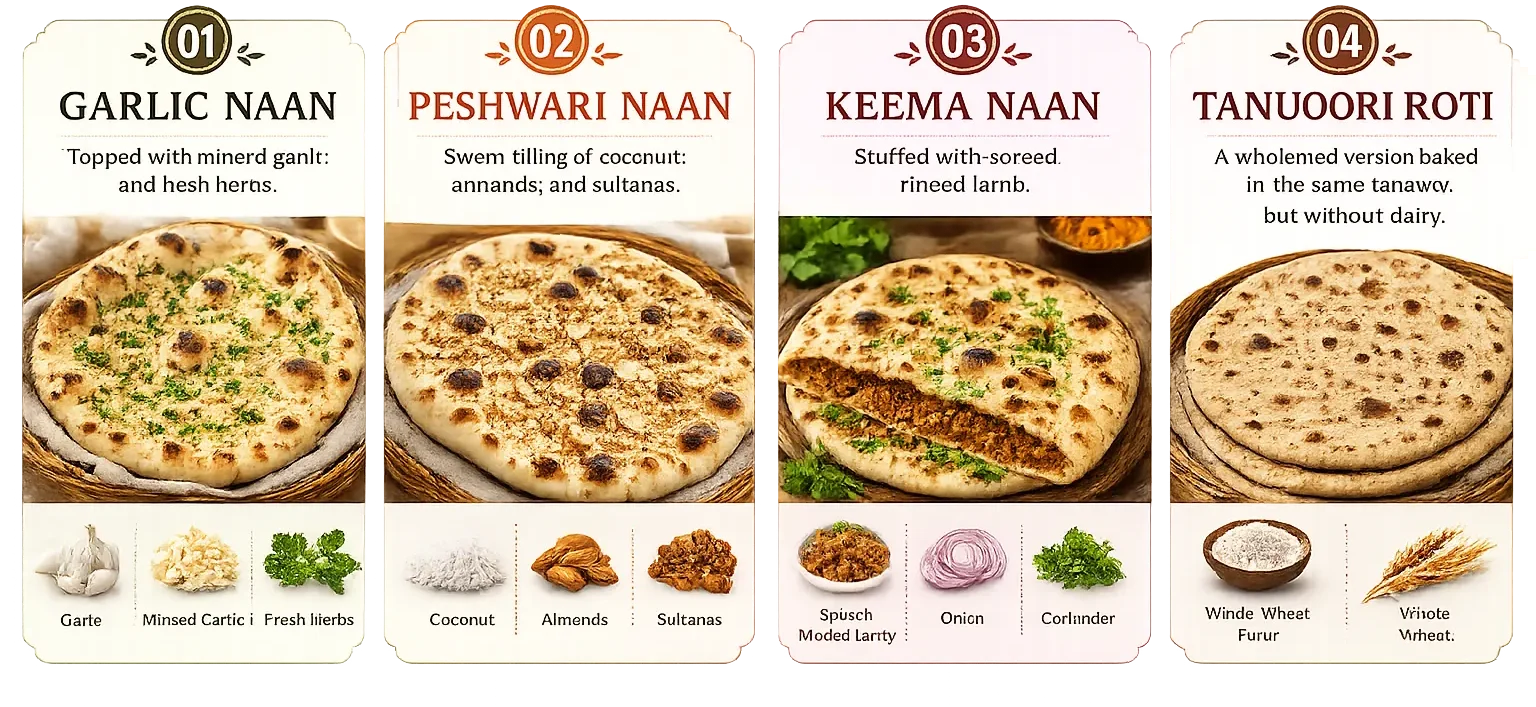
- Garlic naan – brushed with butter and fresh garlic
- Peshwari naan – sweet coconut and almond filling
- Keema naan – filled with spiced minced lamb
- Tandoori roti – wholemeal, baked in our tandoor
- Paratha – flaky, buttery, and made to order
Whether you’re joining us before a show in the West End, enjoying a business lunch, or looking for authentic North Indian food near Covent Garden, our bread selection is a natural part of the experience.
Reserve your table at Delhi Brasserie →
Frequently Asked Questions About Indian Bread
1. What is the difference between naan and roti?
Roti is an unleavened flatbread made from whole wheat flour (atta) and cooked on a griddle. Naan is a leavened bread made from refined flour (maida) with yeast and yoghurt, then baked in a tandoor oven. Naan is softer, richer, and slightly thicker than roti. Roti is the lighter, everyday choice; naan is more indulgent and restaurant-oriented.
2.What flour is used to make chapati?
Chapati is made from atta — a finely milled whole wheat flour. It is the same flour used for roti. Chapati flour has a slightly earthy, nutty flavour and produces a thin, soft flatbread. It is different from maida (refined white flour), which is used for naan and kulcha.
3.What is tandoori roti?
Tandoori roti is a whole wheat flatbread baked directly inside a tandoor oven. Unlike regular roti cooked on a griddle, tandoori roti picks up a subtle smokiness and a lightly charred exterior from the clay oven’s intense heat. It is unleavened and dairy-free, making it a lighter alternative to naan.
4. Is naan always cooked in a tandoor oven?
Traditional naan is cooked by pressing the dough against the inner walls of a tandoor oven, where it bakes in minutes. However, naan can also be made on a hot skillet or under a grill, though the result lacks the authentic char and smoky flavour that a real tandoor produces.
5. What is the difference between kulcha and naan?
Both kulcha and naan are leavened breads made from refined flour. The key differences are: naan uses yeast as its leavening agent, while kulcha uses baking powder or baking soda. Naan is almost always cooked in a tandoor; kulcha can be cooked on a tawa. Kulcha is slightly softer and denser than naan, and is particularly associated with Punjabi cuisine.
6. What is Amritsari kulcha?
Amritsari kulcha is a famous stuffed flatbread from the city of Amritsar in Punjab, North India. It is filled with spiced potato and onion, cooked with generous amounts of ghee, and traditionally served with chole (Punjabi chickpea curry). It is considered one of the most iconic North Indian street foods.
7. Why does puri puff up when cooked?
Puri puffs up because of steam. When the rolled dough disc is submerged in hot oil, steam builds up rapidly inside the dough and causes it to inflate like a balloon. The result is a hollow, crispy bread that is light on the inside. This only works because puri dough is unleavened and rolled thin enough for the steam to expand it.
8. Which Indian bread is the healthiest?
Roti (chapati) is generally considered the lightest option because it uses whole wheat flour, contains no dairy, and is cooked dry on a griddle with little or no added fat. Paratha and naan are richer due to ghee, dairy, and (in naan’s case) refined flour. Puri is the most indulgent choice since it is deep-fried. For a balanced option with tandoor flavour, tandoori roti is a good middle ground.


