
What Is a Thali?
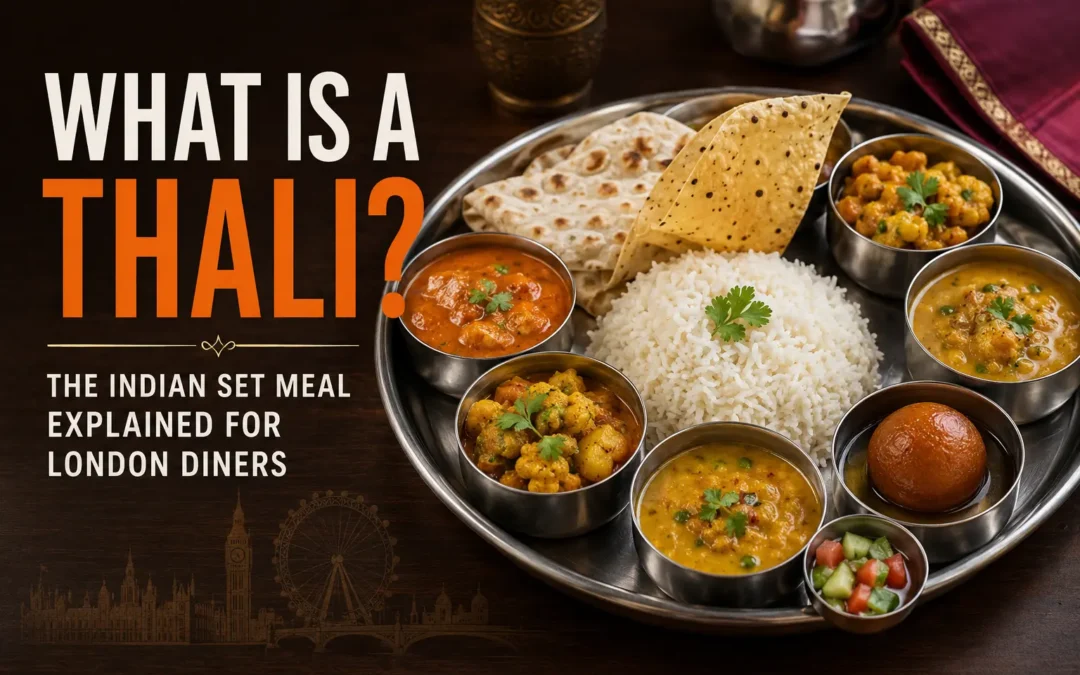
A thali is a complete Indian meal served on one large plate or tray, with smaller bowls holding different dishes. The word “thali” comes from Hindi and literally means “plate” or “platter.”
In practice, a thali usually includes rice or bread, a lentil dish (dal), one or two vegetable curries, yoghurt, pickle, papad, and a sweet dish. It is designed to give you a balanced taste of an entire cuisine in a single sitting.
For London diners, especially those exploring restaurants in Soho and the West End, a thali offers an easy way to sample several authentic Indian flavours without ordering multiple separate dishes.
Thali Meaning: Where Does the Word Come From?
The term thali refers to both the meal and the metal or steel plate it is traditionally served on. In many Indian households and restaurants, the plate itself is called a thali, and the food arranged on it takes the same name.
- Thali (plate): A round metal tray, often stainless steel, brass, or silver.
- Thali (meal): A full set meal with multiple small dishes arranged around a central portion of rice or bread.
Over time, the word has come to represent the entire dining concept rather than just the dish it is served on.
What Is a Thali Dish? How It’s Typically Served
A thali dish is not one single food item. It is a combination of several small dishes served together, each in its own bowl (called a katori).
A standard thali usually contains:
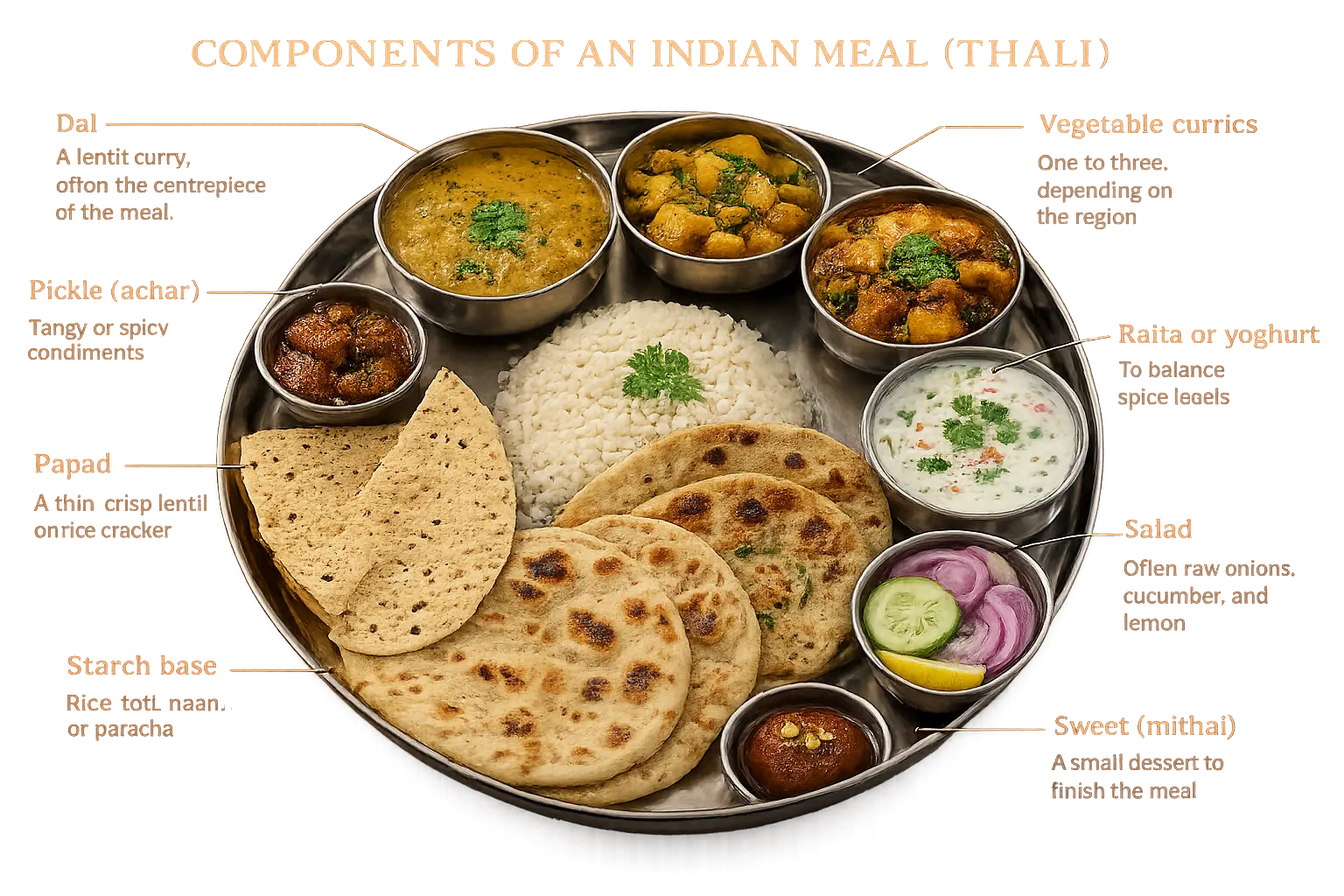
This format allows diners to mix flavours, textures, and spice levels in every bite, which is part of why thalis are popular with people trying Indian food for the first time.
Different Types of Indian Thali Explained
North Indian Thali
A North Indian thali typically centres around wheat-based breads such as roti, naan, or paratha, paired with rich, creamy curries.
Common components include:
- Dal makhani or dal tadka
- Paneer-based curry (such as paneer butter masala)
- A seasonal vegetable dish
- Raita
- Pickle and papad
- Rice (often jeera rice or plain basmati)
- A sweet like gulab jamun or kheer
North Indian thalis tend to use more dairy, ghee, and warming spices like cumin, garam masala, and coriander.
South Indian Thali
A South Indian thali, often served on a banana leaf in traditional settings, is built around rice rather than bread.
Typical items include:
- Steamed rice (sometimes served in multiple courses)
- Sambar – a tangy lentil and vegetable stew
- Rasam – a thin, peppery soup
- Two or more vegetable curries (poriyal or kootu)
- Curd (yoghurt) rice to finish
- Papad and pickle
- A small sweet such as payasam
South Indian thalis are generally lighter, with more emphasis on tamarind, curry leaves, mustard seeds, and coconut.
South Indian Thali vs North Indian Thali: Key Differences
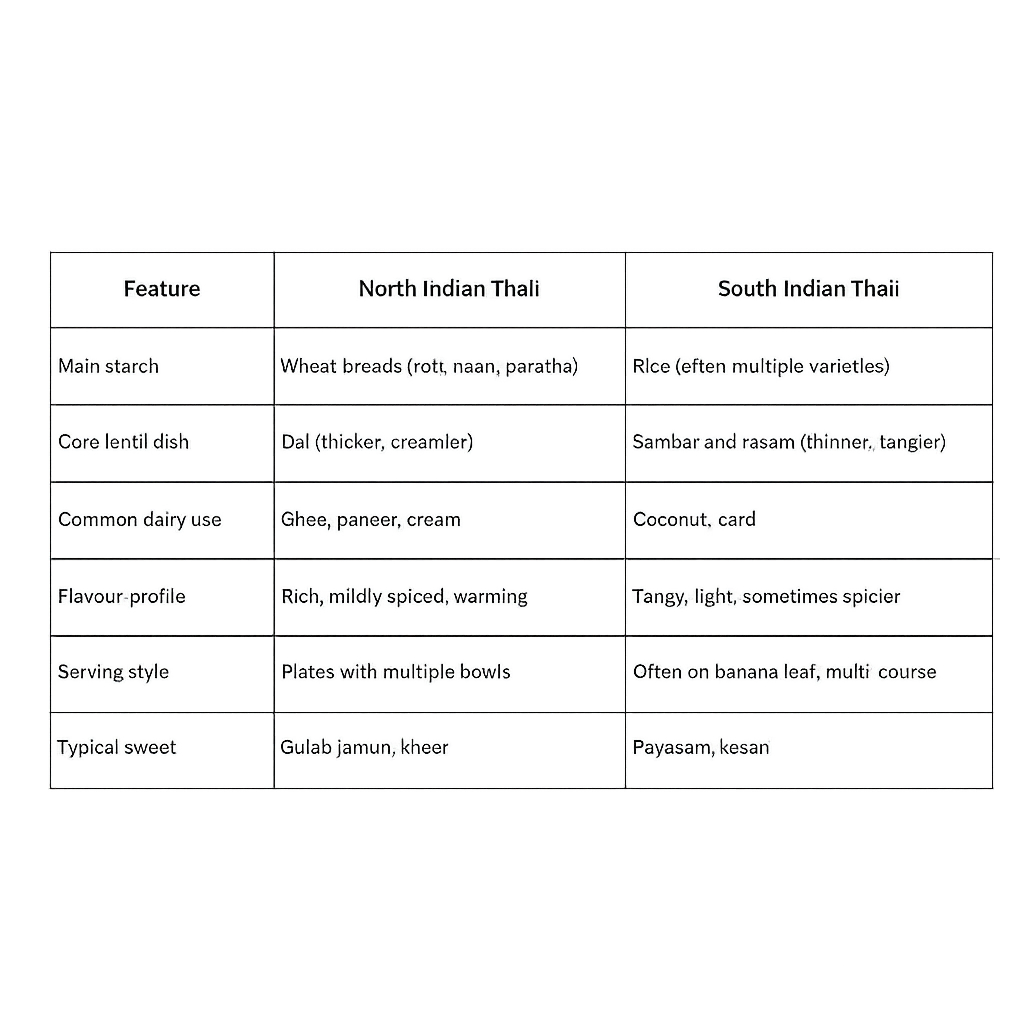 Both styles are designed to be balanced meals, combining protein, carbohydrates, vegetables, and condiments in one sitting.
Gujarati Thali
A Gujarati thali is known for its mix of sweet, salty, and spicy flavours in the same meal.
It usually features:
- Two to three vegetable dishes, often with a hint of jaggery
- Dal (commonly slightly sweet)
- Kadhi – a yoghurt-based curry
- Rotli or thepla (thin flatbreads)
- Rice
- Farsan – savoury snacks like fafda or khandvi
- A sweet such as shrikhand
Rajasthani Thali
A Rajasthani thali reflects the desert region’s reliance on lentils, grains, and dried vegetables due to limited fresh produce historically.
Common dishes include:
- Dal Baati Churma – lentils with baked wheat balls and a sweet crumble
- Gatte ki sabzi – gram flour dumplings in curry
- Ker sangri – a dish made from dried beans and berries
- Bajra roti (millet bread)
- Buttermilk (chaas)
Bengali Thali
A Bengali thali is centred on rice and fish, reflecting the region’s location near rivers and the coast.
Typical elements include:
- Steamed rice
- Fish curry (machher jhol)
- Dal, often with a hint of mustard oil
- A vegetable dish like shukto (a mixed vegetable stew)
- Chutney
- A sweet such as rasgulla or mishti doi
How a Thali Differs from Other Indian Meal Formats
Some diners confuse a thali with other Indian dining styles. Here is how it compares:
- A thali is a fixed combination of multiple small dishes served together.
- A curry meal usually involves ordering one main curry with rice or bread separately.
- A buffet allows unlimited self-service from a larger spread of dishes.
- A tasting menu (common in fine dining) is similar in concept but follows a Western course structure rather than traditional Indian serving customs.
A thali stands out because everything arrives at once, allowing diners to combine flavours as they eat rather than moving through separate courses.
Why Thalis Are Popular Among London Diners
Thalis have become a practical choice for diners across London for several reasons.
- Good for groups: Thalis let everyone try a variety of dishes without committee-style ordering.
- Balanced portions: Smaller servings of each dish reduce food waste compared to large individual mains.
- Ideal before theatre shows: A thali is generally quicker to serve than multiple separate courses, useful for diners with a show to catch in Soho or the West End.
- Good value: Ordering a thali often costs less than ordering the same dishes individually.
- Vegetarian-friendly: Many thalis are fully vegetarian or offer a vegetarian version by default, suiting diners with dietary preferences.
For first-time visitors to Indian restaurants, a thali also removes the guesswork of deciding what to order, since it is curated to represent a balanced regional meal.
What to Expect When Ordering a Thali in a London Restaurant
When ordering a thali at an Indian restaurant in Soho or elsewhere in London, diners can generally expect:
- A large metal or wooden tray with several small bowls
- A mix of one or two curries, dal, rice or bread, yoghurt, pickle, and a dessert
- Vegetarian and non-vegetarian options, depending on the restaurant
- Refills on rice, bread, or dal in some restaurants following traditional Indian hospitality customs
- A set price, usually clearly listed on the menu as a “thali” or “set meal”
Some restaurants offer regional thalis (such as South Indian or Gujarati) as a way to introduce diners to specific culinary traditions, while others serve a more general Indian thali combining popular dishes from multiple regions.
Is a Thali Suitable for Vegetarians and Vegans?
Most thalis include a vegetarian option, and many traditional thalis are fully vegetarian by default, particularly Gujarati and South Indian styles.
For vegan diners, some adjustments may be needed:
- Ghee and yoghurt (curd) are common in many thalis and are not vegan.
- Some restaurants can prepare a vegan thali on request by substituting oil for ghee and removing dairy-based items.
- South Indian thalis are often easier to adapt for vegan diners, as coconut milk can replace dairy in several dishes.
It is worth asking staff directly about vegan options, as substitutions vary between restaurants.
Thali for Special Occasions and Private Dining
Thalis also work well for corporate events and private dining bookings in London.
- A thali format allows hosts to serve a consistent, pre-set meal to larger groups without individual ordering.
- It offers variety, so guests with different tastes can find something they enjoy within the same meal.
- Many Indian restaurants offer set thali menus specifically designed for private dining rooms or group bookings.
This makes thalis a convenient option for business lunches, family celebrations, or pre-theatre group dinners in the Soho area.
Final Thoughts
A thali offers one of the most complete ways to experience Indian cuisine in a single meal. From the rich, bread-based thalis of North India to the rice-and-coconut-based thalis of the South, each regional style tells its own culinary story.
For diners in Soho and across London, ordering a thali is a simple way to enjoy a balanced, authentic, and varied Indian dining experience, whether for a quick pre-theatre dinner, a family meal, or a private group booking.
Delhi Brasserie is a long-established Indian restaurant in Soho, London, serving authentic Indian cuisine in a welcoming setting. Visit Delhi Brasserie to explore the menu, make a reservation, or learn more about the restaurant.
Frequently Asked Questions
1. What does thali mean in English?
Thali means “plate” or “platter” in Hindi. It refers to both the metal tray used for serving and the complete meal arranged on it.
2. What is a thali dish made of?
A thali dish is made up of several smaller dishes served together, typically including rice or bread, dal, one or more vegetable curries, yoghurt, pickle, papad, and a sweet.
3. What is the difference between North Indian and South Indian thali?
North Indian thali usually centres around wheat breads and richer, dairy-based curries. South Indian thali is built around rice, with lighter dishes like sambar and rasam, often flavoured with coconut and tamarind.
4. Is a thali a full meal?
Yes. A thali is designed to be a complete, balanced meal in one serving, combining carbohydrates, protein, vegetables, and condiments.
5. Are all thalis vegetarian?
Not all, but many are. Gujarati and South Indian thalis are commonly vegetarian by tradition, while North Indian and Bengali thalis may include meat or fish options depending on the restaurant.
6. How many dishes are typically in a thali?
Most thalis include between six and ten small dishes, though this can vary by region and restaurant. Festive or special thalis sometimes include more.
7. Can I get a thali for one person, or is it meant for sharing?
A thali is typically served as an individual portion, meant for one diner, though the variety of dishes makes it feel like a shared experience of flavours.
8. Why are thalis a good choice for pre-theatre dining in Soho?
Thalis are usually served as a complete set, which can reduce waiting time between courses. This makes them a practical choice for diners with a fixed schedule, such as those attending a show in the West End.


