
Indian cuisine in London grew from one coffee house into part of everyday city life. The history of Indian food in London starts in 1810, when Sake Dean Mahomed opened the city’s first Indian restaurant near Portman Square.
It then began spreading through West End dining rooms in the 1920s, post-war migration and a newer interest in regional dishes. Today, Indian food culture is part of how Londoners celebrate, meet clients and eat before a show.
This guide covers the key moments, the people behind them and where traditional Indian cuisine fits in Soho today.
The History of Indian Food in London at a Glance
When Did Indian Food First Reach London?
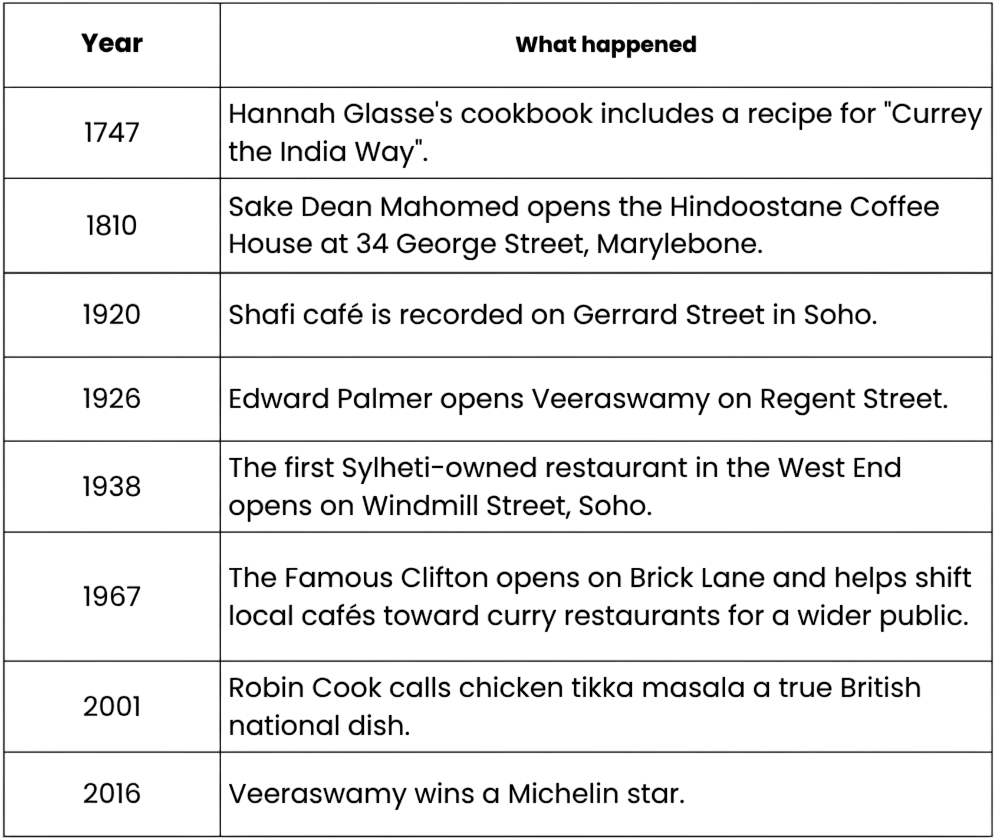
Indian flavours reached English kitchens long before the first restaurant. British traders met curry in 17th-century India and brought the taste home. Hannah Glasse printed a recipe for “Currey the India Way” in 1747.
By the 1780s, some fashionable Piccadilly restaurants served curry and rice as house specialities, according to historian Rozina Visram, cited by the Beyond Banglatown project. A Piccadilly shop was also advertising curry powder in 1784.
Who Opened London’s First Indian Restaurant?
Sake Dean Mahomed did. Born in Bihar in 1759, he served in the East India Company’s army before settling in London. In 1810, he opened the Hindoostane Coffee House at 34 George Street in Marylebone.
It served Indian dishes and hookah smoking to former East India Company staff who missed the food. Reviews were good, but sales were weak, and Mahomed went bankrupt in 1812.
A Westminster Green Plaque now marks the site. It was unveiled in 2005. Mahomed also wrote The Travels of Dean Mahomet in 1794, the first book in English by an Indian writer.
Veeraswamy and the Rise of Indian Fine Dining
Edward Palmer opened Veeraswamy in 1926 on Regent Street, close to Piccadilly Circus. Palmer was a retired Anglo-Indian officer of the British Indian Army. He created it as a refined introduction to Indian food for British guests.
Early dishes included dhansak, dopiaza, Madras curry and vindaloo. Its formal dining rooms helped Indian fine dining in London sit beside European restaurants. It won a Michelin star in 2016.
Update note: as of July 2026, Veeraswamy was still trading while its lease dispute with the Crown Estate waited for a court hearing that had been postponed (MCA Insight, 30 June 2026).
How Did Migration Change Indian Restaurants in London?
Post-war migration turned Indian food into an everyday choice, and the influence of Indian cuisine in London grew from that point. After the 1947 partition of India, many South Asians settled in Britain, and many went into catering.
Bengali cafés in the East End grew with them. By the late 1940s, Sylheti-owned cafés served the growing Bengali community on Brick Lane. The Famous Clifton opened at 124 Brick Lane in 1967 and marked a turning point. Cafés began adapting their menus for a wider public.
Brick Lane had four curry restaurants and four cafés in 1980. By 1990 it had six curry restaurants aimed mainly at white, middle-class customers. In the late 1990s the street was redeveloped as “Banglatown” and became known as London’s curry capital.
Who Runs Indian Restaurants in the UK?
Bangladeshi owners run most restaurants sold as “Indian”. Estimates differ:
- About 80%: Beyond Banglatown, a Brick Lane history project.
- 65–75%: Peter Groves of National Curry Week, quoted by Historic UK (2023).
Many of these owners trace their roots to Sylhet in Bangladesh.
Why Did Chicken Tikka Masala Become So Popular?
Chicken tikka masala shows how Indian cooking adapted to British tastes. Historic UK describes it as an Indian dish modified for British palates. Robin Cook called it a true British national dish in 2001.
Beyond Banglatown notes that chicken jalfrezi overtook it in 2011. The dish helped many people try Indian food for the first time. It also left room for restaurants that focus on regional and traditional cooking.
How Big Is Indian Food Culture in the UK Today?
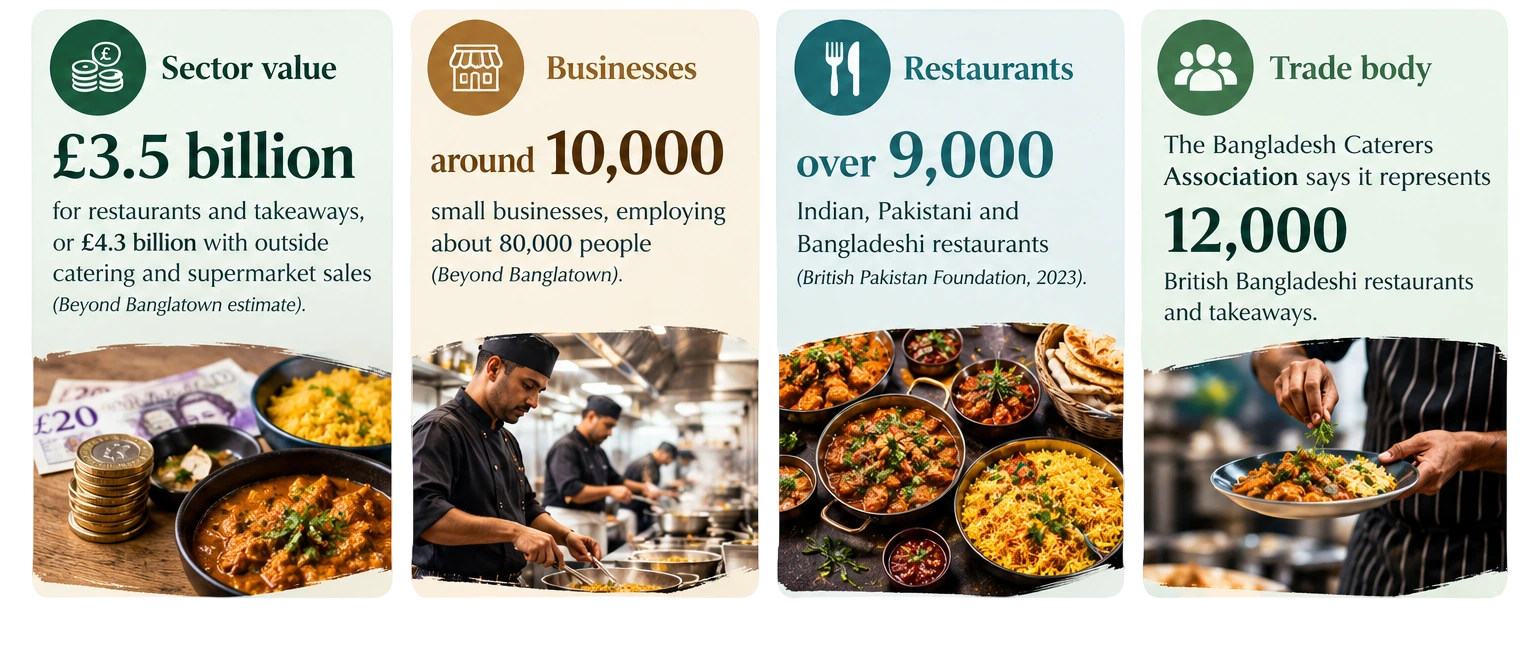
No single official count exists, so figures change with the source and the definition.
The Evolution of Indian Food in London: From Curry Houses to Regional Menus
Diners now ask where a dish comes from. Regional Indian cuisine has moved to the front of many menus, and Indian cuisine in London now goes well beyond the standard curry list. Veeraswamy itself moved from Raj-era Anglo-Indian dishes to food from states such as Punjab and Kashmir, alongside Hyderabadi and Mughal cooking.
Three shifts stand out:
- From generic “curry” to named regional dishes.
- From Raj-style rooms to elegant, modern dining rooms.
- From quick meals to occasions, such as celebrations, business dinners and pre-theatre tables.
What Is Traditional North Indian Cuisine?
Traditional North Indian cuisine comes from regions such as Punjab, Kashmir and Delhi. Mughal and Punjabi cooking shaped much of it. Common features include:
- Tandoor (clay oven) cooking
- Breads such as naan, roti and paratha
- Slow-cooked gravies
- Paneer, lentils and yoghurt-based marinades
These Indian culinary traditions reached London through the restaurants described above. Northern snacks such as chaat and samosas are also part of Indian street food in London.
Where Can You Eat Traditional Indian Cuisine in Soho?
Delhi Brasserie serves traditional Indian food at 44 Frith Street in Soho. It sits close to Leicester Square, Piccadilly Circus, Covent Garden, Oxford Street and Trafalgar Square. That makes it easy to reach from across Central London and the West End.
Its sample menus list dishes such as lamb pasanda, chicken korma and tandoori quail. For a fine dining Indian restaurant in London with table service and a welcoming setting, it suits couples, families and groups.
Pre-Theatre and Post-Theatre Dinners
The restaurant opens at 5pm every day. It stays open until 11:30pm, or midnight on Fridays and Saturdays. That suits an early dinner before a show or a later table afterwards. Tell the team your curtain time when you book.
Private Dining and Group Bookings
Delhi Brasserie has three separate dining areas for private parties of up to 30 guests. Online booking covers up to 20 guests. For larger groups, or more than 8 guests on a Friday or Saturday, call the restaurant.
Celebrations and Business Dinners
Birthdays, anniversaries and client dinners suit a calm, table-service setting. Mention the occasion and any dietary needs when you book.
Plan Your Visit
- Address: 44 Frith Street, Soho, London W1D 4SB
- Hours: daily from 5pm; open every day of the year, including bank holidays
- Phone: 020 7437 8261 (after 4pm)
- WhatsApp: 07562 600591 (any time)
- Email: info@delhibrasserie.com
- Reservations: delhibrasserie.com/reservations
Frequently Asked Questions
1. Who opened the first Indian restaurant in London?
Sake Dean Mahomed opened it. His Hindoostane Coffee House opened in 1810 at 34 George Street in Marylebone. A Westminster Green Plaque marks the site.
2. What is the oldest Indian restaurant in London?
Veeraswamy on Regent Street is Britain’s oldest surviving Indian restaurant. Edward Palmer opened it in 1926. As of July 2026 it was still trading while a lease dispute with the Crown Estate awaited a court hearing, so check its current status before you plan a visit.
3. When did Indian food become popular in London?
There is no single date. Curry was on some Piccadilly menus by the 1780s, and the first Indian restaurants followed from 1810. Growth picked up after the Second World War, and Brick Lane became a curry destination in the late 1990s.
4. Why are so many Indian restaurants in the UK run by Bangladeshis?
Many Bengali and Sylheti migrants entered catering after the 1940s. Early Bengali cafés in the East End grew into curry restaurants for a wider public. Estimates put Bangladeshi ownership between 65% and 80% of “Indian” restaurants.
5. Is chicken tikka masala Indian or British?
It is an Indian-style dish adapted for British tastes. Robin Cook called it a true British national dish in 2001. Its story shows how Indian cooking changed as it settled in the UK.
6. What is North Indian cuisine?
It is the food of northern regions such as Punjab, Kashmir and Delhi. It is known for tandoor cooking, breads like naan and roti, slow-cooked gravies, paneer, lentils and yoghurt-based marinades.
7. Is there an Indian restaurant near Leicester Square for pre-theatre dining?
Yes. Delhi Brasserie is at 44 Frith Street in Soho, a short walk from Leicester Square and Theatreland. It opens at 5pm every day, so tell the team your show time when you book.
8. Does Delhi Brasserie have private dining rooms for groups?
Yes. It has three separate dining areas for private parties of up to 30 guests. Online booking covers up to 20 guests. Call the restaurant for larger parties, or for more than 8 guests on Fridays and Saturdays.
Conclusion
Indian food took more than 200 years to become part of London life. It began with a coffee house in Marylebone and grew through Soho and West End dining rooms, post-war migration and a demand for regional cooking.
If you are looking for Indian cuisine in London that stays true to tradition, Delhi Brasserie at 44 Frith Street is a short walk from Leicester Square, Covent Garden and Piccadilly Circus. Book online, call 020 7437 8261 after 4pm, or message on WhatsApp to ask about private dining.


